

Who Develops Compliant Custom Software Tools and Prototypes for White-Label or Internal Solutions?
Companies that need white-label or internal software tools face a common dilemma: build in-house and absorb months of overhead, or find a trustworthy development partner who understands compliance, branding, and scalability from day one. White-label software is a product developed by one company but rebranded and sold by other companies as their own. For businesses across Indiana and beyond, choosing the right custom software partner can mean the difference between a product that accelerates growth and one that stalls it. This guide explains who builds these solutions, what to look for in a partner, and how to ensure your project stays compliant and on budget.
What Is White-Label and Internal Custom Software?
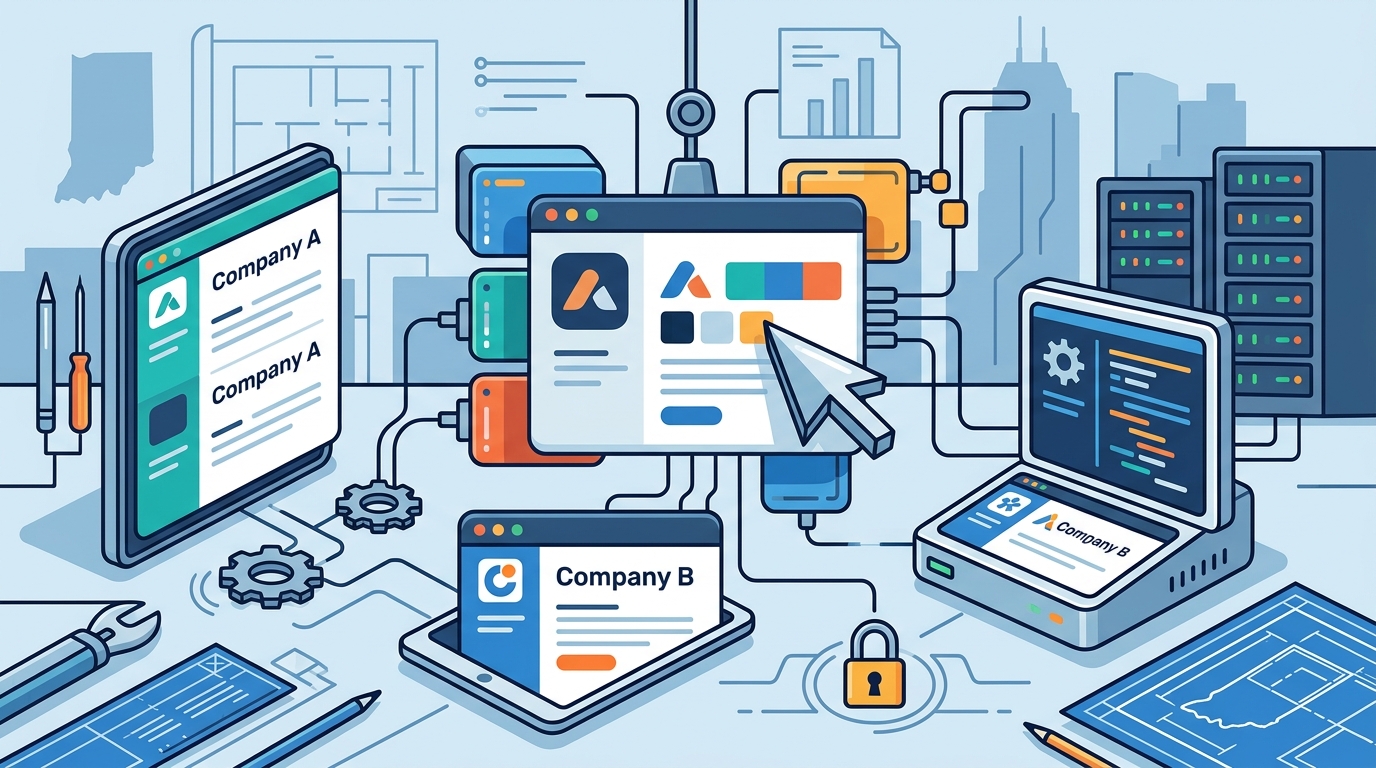
White-label software is a ready-made product developed by one company and rebranded, resold, or licensed to another. The purchasing business adds its own logo, colors, and identity, then offers it to customers as if it were built internally. Internal software, by contrast, is a tool built exclusively for a single organization's operations and never resold.
Both approaches solve the same core problem: getting a reliable digital tool into users' hands without a massive in-house engineering budget. Whether you need a customer portal, an automation dashboard, or a mobile app for field teams, the underlying development process follows a similar path of discovery, prototyping, building, and testing.
Common Use Cases
Businesses use white-label tools for CRM platforms, booking systems, reporting dashboards, and e-commerce storefronts. Nonprofits and churches often need internal tools for donor management, event coordination, or volunteer scheduling. Maranatha Tech Solutions offers custom software development tailored to exactly these kinds of scenarios for small businesses, churches, and nonprofits in Indiana.
Who Builds Compliant Custom Software Prototypes?
Custom software prototypes and MVPs are typically built by specialized development firms, outsourced engineering teams, or hybrid partners that combine consulting with hands-on coding. A prototype is a functional early version of a product used to validate ideas, gather feedback, and secure stakeholder buy-in before committing to full-scale development.
What to Expect From a Development Partner
A strong partner walks you through requirements gathering, wireframing, and iterative builds. Maranatha Tech Solutions works with vetted IT professionals who bring expertise in React, TypeScript, Node.js, and modern database technologies. This means your prototype is built on production-grade foundations rather than throwaway code.
Local Advantage
Working with a partner based in your region provides faster communication cycles and on-site collaboration when needed. Maranatha Tech Solutions is based in Westfield, Indiana, and brings over 15 years of enterprise-level experience from companies like Salesforce to local businesses across Hamilton, Hendricks, and Marion Counties.
Why Compliance Matters in Custom Software
Compliance in software development refers to the practice of building applications that adhere to industry regulations, data-protection laws, and security standards. Depending on your sector, this could involve HIPAA for healthcare, PCI-DSS for payment processing, or SOC 2 for data handling.
Ignoring compliance during the prototype phase creates expensive rework later. A responsible development partner embeds security best practices and regulatory considerations from the very first sprint. Maranatha Tech Solutions includes cybersecurity policies and compliance guidance as part of its service offerings, helping clients stay compliant with relevant regulations while securing their operations and data.
White-Label vs. Fully Custom Development
Understanding when to choose white-label versus fully custom software depends on your budget, timeline, and how unique your requirements are. The table below highlights key differences.
| Factor | White-Label Software | Fully Custom Software |
|---|---|---|
| Development Time | Days to weeks | Months to a year or more |
| Cost | Lower upfront; subscription or license fees | Higher upfront; project-based pricing |
| Customization Depth | Branding and configuration | Full control over every feature |
| IP Ownership | Usually retained by the original developer | Typically owned by the commissioning business |
| Maintenance | Often included by the provider | Managed by your team or partner |
| Compliance Control | Dependent on provider's standards | Built to your exact regulatory requirements |
For organizations that need deep compliance control or highly unique workflows, fully custom development is usually the better path. Maranatha Tech Solutions uses project-based pricing rather than rigid hourly billing, which keeps costs transparent and aligned to your scope.
Key Benefits of Partnering With a Custom Software Developer
Outsourcing your software build to a dedicated partner offers strategic advantages that go beyond just saving money.
Speed and Focus
A specialized team can move from concept to working prototype in weeks, freeing your internal staff to focus on core operations. White-label SaaS strategies alone can cut time-to-market by 60 to 80 percent, and fully custom builds benefit from similar efficiencies when handled by an experienced partner.
Access to Expert Talent
Hiring a full in-house development team is expensive, especially for small and mid-sized businesses. A development partner gives you access to senior engineers, designers, and QA specialists without permanent payroll commitments. Maranatha Tech Solutions' contractor network, for example, includes seasoned software engineers with backgrounds in full-stack development and enterprise systems.
Long-Term Maintenance
Software is never truly "done" after launch. Ongoing bug fixes, security patches, and feature additions are essential. A good partner provides maintenance and update services to ensure long-term performance and security.
How to Choose the Right Development Partner
Not every software firm is the right fit. Here are the criteria that matter most when evaluating a development partner for white-label or internal tools.
Track Record and Transparency
Look for a company with verifiable experience, client testimonials, and clear communication practices. Maranatha Tech Solutions is BBB accredited, demonstrating a commitment to ethical business practices and customer satisfaction.
Technical Breadth
Your partner should be comfortable across front-end frameworks, back-end systems, databases, and cloud infrastructure. Verify that their stack aligns with your needs, whether that is React and Node.js for web applications or cross-platform tools for mobile.
Values Alignment
For churches, nonprofits, and mission-driven organizations, working with a partner that shares your values matters. Maranatha Tech Solutions is guided by Christian principles of service and excellence, which shapes how the team approaches every engagement.
Key Takeaways
- White-label software lets you offer branded tools without building from scratch, but fully custom development gives you complete control over compliance and features.
- A prototype is a functional early version of your product that validates ideas before you commit to a full build.
- Compliance should be embedded from the first sprint, not bolted on after launch.
- Project-based pricing offers better cost transparency than hourly billing for custom software projects.
- Partnering with a local developer like Maranatha Tech Solutions provides faster communication and on-site support when needed.
- Access to vetted senior engineers eliminates the overhead of building an in-house team.
- Ongoing maintenance and updates are essential; your development partner should offer them as part of the engagement.
Frequently Asked Questions
What is white-label software?
White-label software is a product developed by one company and rebranded by another company to sell or use under its own brand. It allows businesses to offer digital tools without investing in ground-up development.
How is white-label different from custom software?
White-label provides a pre-built product you can rebrand but not deeply modify. Custom software is built to your exact specifications, giving you full ownership and flexibility over every feature and compliance requirement.
Who needs compliant custom software?
Any business handling sensitive data, operating in regulated industries like healthcare or finance, or serving government contracts needs software built with compliance in mind from the start.
How long does it take to build a software prototype?
A functional prototype typically takes four to eight weeks depending on complexity. Maranatha Tech Solutions follows an iterative process of discovery, wireframing, and development to keep timelines predictable.
Does Maranatha Tech Solutions build white-label tools?
Yes. Maranatha Tech Solutions develops custom applications and software tailored to specific business needs, including solutions designed for white-label distribution or internal use by small businesses, churches, and nonprofits.
What technology stack does Maranatha Tech Solutions use?
The team works with modern technologies including React, JavaScript, TypeScript, Node.js, and various database systems, ensuring scalable and maintainable solutions.
How much does custom software development cost?
Costs vary based on scope and complexity. Maranatha Tech Solutions uses project-based pricing rather than fixed hourly rates, allowing each engagement to be scoped to the client's specific needs and budget.
Can a small business afford custom software?
Yes. Project-based pricing and phased development approaches make custom software accessible to small businesses. Starting with an MVP lets you validate your idea before investing in a full build.
Ready to Build Your Custom Software Solution?
Whether you need a white-label tool, an internal platform, or a working prototype to pitch stakeholders, Maranatha Tech Solutions can help you move from idea to reality. Schedule a free consultation today to discuss your project requirements, timeline, and budget with a team that values integrity, technical excellence, and your success.