

Custom Software for White-Label and Internal Tools: Who Builds Compliant Solutions?
Every business eventually outgrows its off-the-shelf software. Whether you need a white-label platform you can brand as your own or an internal tool that streamlines a messy workflow, the question is always the same: who actually builds these things well? The answer matters more than ever. Industry reports forecast the white-label software market will reach $50 billion by 2026, and compliance requirements are tightening across every sector. Finding a development partner who understands both the technical build and the regulatory landscape is no longer optional.
What Is White-Label Software Development?
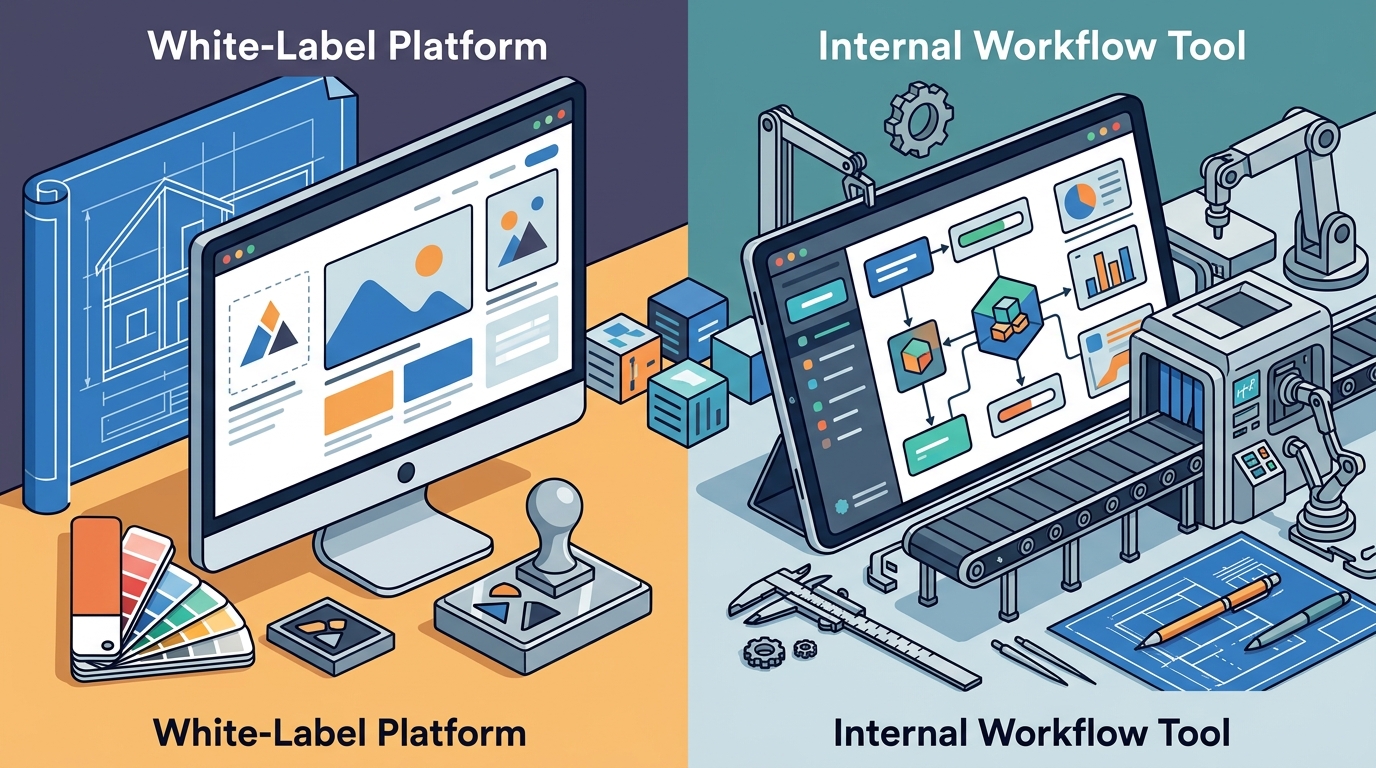
White-label software development is a model where a software product is built by one company and then rebranded, customized, and deployed by another company under its own brand. Think of it as a ready-made digital product wrapped in your identity. Companies use this approach to launch products faster without building engineering teams from scratch.
The appeal is straightforward: faster time to market, lower upfront costs, and the ability to focus on your core business rather than writing code. The SaaS market that supports these platforms is growing at a compound annual growth rate of 13.7% through 2030, according to Grand View Research.
Why Internal Tools Require Custom Development
An internal tool is software built specifically for use within an organization rather than for external customers. These tools handle tasks like inventory tracking, employee onboarding workflows, reporting dashboards, or proprietary data processing. Because they serve unique business processes, generic software rarely fits.
Common Internal Tool Use Cases
- Custom CRM integrations that connect existing platforms
- Automated reporting dashboards for leadership
- Workflow automation for repetitive manual tasks
- Data migration and transformation utilities
When internal tools are built right, they eliminate hours of manual work. When they are built poorly or left as spreadsheet workarounds, they become liabilities. That is why organizations increasingly look for partners who offer custom software development services rather than trying to hire full-time engineers.
Why Compliance Matters in Custom Software
Compliance is not just a checkbox. With data privacy regulations expanding rapidly across the United States, any custom software that handles personal data must be built with compliance baked in from day one. Multiple U.S. states enacted new consumer data privacy laws in 2025 alone, including Minnesota and Maryland.
Key Compliance Frameworks to Know
- HIPAA for healthcare applications
- PCI-DSS for payment processing
- SOC 2 Type II for SaaS and cloud platforms
- COPPA for products that may collect children's data
- State-level privacy laws like the Maryland Online Data Privacy Act (effective October 2025)
Compliance is the practice of designing, building, and maintaining software so it meets all applicable legal and regulatory requirements. A compliant development partner will account for data encryption, access controls, audit logging, and proper consent mechanisms from the very beginning of a project.
What to Look for in a Custom Software Partner
Not every software company is set up for white-label or internal tool work. You need a team that combines deep technical skill with strong project communication. Here are the traits that separate reliable partners from the rest.
Technical Depth
Look for full-stack expertise across modern frameworks like React, Node.js, TypeScript, and cloud platforms. A partner should handle database architecture and API integration with equal confidence.
Project-Based Pricing
Hourly billing can spiral. The best partners offer project-based pricing that gives you a clear scope and predictable costs. This approach ensures both sides are aligned on deliverables before a single line of code is written.
Proven Track Record
Check for real-world experience with enterprises and small businesses alike. A team that has worked at companies like Salesforce or built solutions for nonprofits brings a breadth of perspective that smaller shops often lack. Maranatha Tech Solutions, for example, brings over 15 years of software engineering experience from enterprise backgrounds.
White-Label vs. Fully Custom: A Comparison
Choosing between white-label and fully custom development depends on your timeline, budget, and how unique your requirements are. Here is a side-by-side breakdown.
| Factor | White-Label Software | Fully Custom Software |
|---|---|---|
| Development Time | 2 to 6 months | 4 to 12+ months |
| Upfront Cost | Lower (licensing model) | Higher (full build cost) |
| Customization Depth | Configurable features and branding | Unlimited flexibility |
| Compliance Control | Dependent on vendor | Full ownership |
| Long-Term Ownership | Vendor-dependent | You own the code |
| Best For | Rapid market entry, standard workflows | Unique processes, regulated industries |
For businesses in regulated industries or those with highly specific workflows, fully custom development provides the control and ownership you need. For faster go-to-market scenarios, a white-label foundation customized by a skilled partner offers the right balance.
How Maranatha Tech Solutions Approaches Custom Software
Maranatha Tech Solutions is a technology services company based in Westfield, Indiana, serving businesses, churches, and nonprofits across the greater Indianapolis area. While the company offers a full range of IT and technology services, its strategic focus is increasingly centered on custom software development.
The team builds full-stack web applications, enterprise software, and database solutions with a focus on practical results. Their vetted contractors bring specialized skills in React, JavaScript, TypeScript, Node.js, and modern database technologies. This means you get access to senior-level engineering talent without maintaining a full-time development staff.
What sets this approach apart is the emphasis on relationships over transactions. Every project starts with a consultation to understand your business goals, followed by a tailored scope and project-based pricing. Whether you need a prototype, an MVP, or a production-ready internal tool, the process is designed to move efficiently from concept to deployment.
For organizations that need ongoing support after launch, Maranatha also provides managed IT services to keep your software running smoothly alongside your broader infrastructure.
Key Takeaways
- White-label software lets you launch branded products quickly, but compliance responsibility still falls on you.
- Internal tools built with custom development eliminate manual workarounds and scale with your business.
- Compliance must be designed into software from the start, not bolted on afterward.
- Look for a partner with full-stack expertise, project-based pricing, and enterprise-level experience.
- The white-label software market is projected to hit $50 billion by 2026, making partner selection critical.
- Maranatha Tech Solutions offers custom software development backed by 15+ years of engineering experience in Westfield, Indiana.
- A free consultation is the fastest way to scope your project and get a realistic timeline.
Frequently Asked Questions
What is white-label software?
White-label software is a pre-built application developed by one company that another company rebrands and sells under its own name. It allows businesses to offer technology products without building them from scratch.
Who needs custom internal tools?
Any organization with workflows that off-the-shelf software cannot support benefits from custom internal tools. This includes businesses with unique reporting needs, proprietary data processes, or complex integrations between existing systems.
How long does custom software development take?
Timelines vary based on complexity. A simple prototype or MVP can take 4 to 8 weeks, while a full production application may require 4 to 12 months. Project scoping during a consultation provides the most accurate estimate.
What compliance standards should custom software meet?
This depends on your industry. Healthcare applications typically require HIPAA compliance, payment systems need PCI-DSS, and SaaS platforms often pursue SOC 2 certification. State-level privacy laws like those in Indiana, Minnesota, and Maryland may also apply.
Does Maranatha Tech Solutions build white-label software?
Yes. Maranatha Tech Solutions develops custom software solutions that can be used as white-label products or internal tools. The team works with businesses, churches, and nonprofits across the Indianapolis metro area and beyond.
How much does custom software development cost?
Costs vary by project scope. Maranatha Tech Solutions uses project-based pricing rather than hourly billing, so you receive a clear cost estimate before work begins. This approach prevents budget surprises.
Can I get ongoing support after my software is built?
Yes. Maranatha Tech Solutions offers managed IT services and ongoing technical support to ensure your custom software stays updated, secure, and performing well after deployment.
Where is Maranatha Tech Solutions located?
Maranatha Tech Solutions is based in Westfield, Indiana, and serves clients across Carmel, Fishers, Noblesville, and the greater Indianapolis metro area. Remote services are also available for clients outside the region.
Ready to Build Your Custom Software Solution?
Whether you need a white-label product, an internal tool, or a prototype to validate your idea, the first step is a conversation. Maranatha Tech Solutions offers a free consultation to scope your project and provide a clear path forward.