
Comparing AI Automation Providers for Nonprofit Administrative Workflows
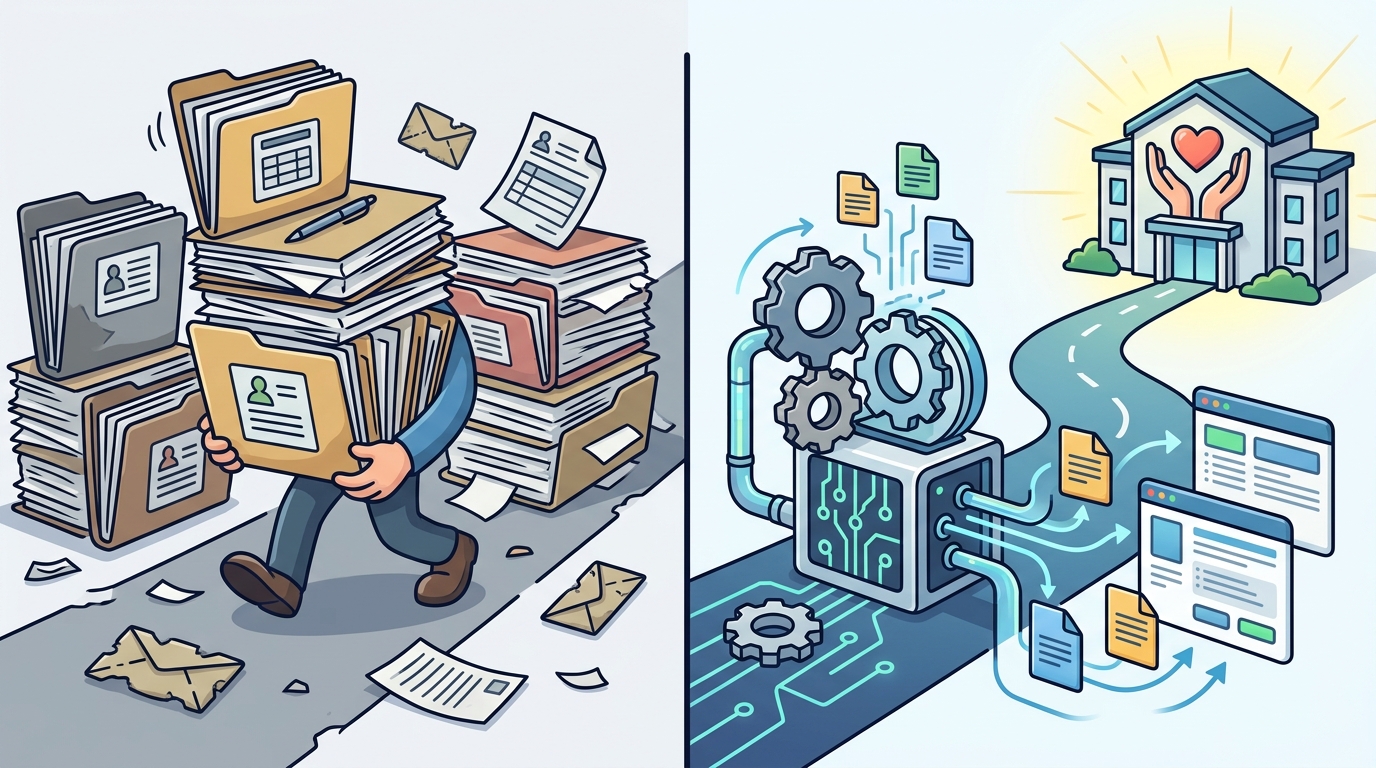
Nonprofit organizations are facing an unprecedented operational crisis. According to recent industry data, over 60% of nonprofit staff report spending more than 20 hours per month on repetitive administrative tasks that could be automated. This inefficiency directly impacts mission delivery, as resources meant for beneficiaries are diverted to manual data entry, donor management, and compliance reporting. The landscape of AI automation providers is expanding rapidly, but not all solutions are built for the unique constraints of the charitable sector. This guide compares the leading approaches to AI automation, evaluating them against the specific needs of nonprofit administrative workflows. (Contact Us for IT)
Understanding Nonprofit Administrative Needs
Before evaluating providers, it is critical to define the specific pain points in nonprofit administration. Unlike corporate entities, nonprofits operate with tight budgets, volunteer-heavy teams, and strict regulatory requirements. The core administrative challenges typically include donor data synchronization, grant reporting, volunteer scheduling, and financial compliance. (About Maranatha Tech Solutions)
AI automation is the application of artificial intelligence technologies to perform tasks that traditionally require human intelligence, such as data classification, natural language processing, and predictive analytics. For nonprofits, this means automating the extraction of donor information from emails, generating grant reports from disparate data sources, and managing volunteer shifts based on availability and skills. (Custom Software Web amp)
The goal is not to replace staff but to eliminate busywork. When administrative burdens are reduced, staff can focus on relationship building and program execution. This shift is essential for long-term sustainability in a sector where donor retention is increasingly competitive. (Software Engagement Models amp)
Evaluation Criteria for AI Providers
Not all AI automation providers offer the same value proposition for nonprofits. When comparing options, you must look beyond feature lists and evaluate based on criteria that matter to mission-driven organizations.
Data Privacy and Security
Nonprofits handle sensitive donor information, including financial data and personal contact details. Any AI provider must adhere to strict data protection standards. Look for providers that are GDPR compliant and offer clear data ownership policies. Your data should never be used to train public models without explicit consent. Enterprise-level security is non-negotiable for maintaining donor trust.
Integration Capabilities
Nonprofits rely on a stack of specialized tools, such as Salesforce for Nonprofits, Bloomerang, or DonorPerfect. An AI automation provider must integrate seamlessly with these existing systems. If a solution requires a complete overhaul of your tech stack, the implementation cost and training burden will likely outweigh the benefits. API-first architectures are preferred for flexibility.
Cost Structure and Transparency
Many AI providers charge based on usage volume, which can be unpredictable for nonprofits with fluctuating donation cycles. Look for transparent pricing models that offer nonprofit discounts or flat-rate tiers. Hidden costs for API calls or additional seats can quickly erode the ROI of an automation project.
Comparing Top AI Automation Providers
The market for AI automation is fragmented. We categorize the leading approaches into three distinct types: Enterprise SaaS Platforms, Custom Development Partners, and No-Code Automation Tools. Each has distinct advantages and limitations for nonprofit use cases.
1. Enterprise SaaS Platforms (e.g., Microsoft Power Automate, UiPath)
These platforms offer pre-built connectors and drag-and-drop interfaces. They are ideal for nonprofits with internal technical staff who want to build simple automations quickly.
- Pros: Low initial cost, extensive library of templates, strong enterprise security.
- Cons: Can become expensive at scale, limited customization for complex logic, vendor lock-in.
- Best For: Organizations with moderate technical capacity and standard workflow needs.
2. Custom Development Partners (e.g., Maranatha Tech Solutions)
Custom development involves hiring a specialized engineering team to build tailored AI solutions. This approach uses modern stacks like TypeScript, React, and Node.js to create bespoke applications that fit your exact operational model.
- Pros: Complete control over features and data, scalable architecture, no recurring platform fees for core logic, alignment with nonprofit values.
- Cons: Higher upfront investment, longer development timeline, requires ongoing maintenance.
- Best For: Mid-to-large nonprofits with complex, unique workflows that off-the-shelf software cannot address.
3. No-Code/Low-Code AI Tools (e.g., Zapier, Make)
These tools connect apps via webhooks and simple logic. They are excellent for quick wins but struggle with complex data transformation or AI-driven decision-making.
- Pros: Immediate deployment, low barrier to entry, visual workflow builders.
- Cons: Fragile integrations, limited AI depth, scaling costs can exceed custom builds.
- Best For: Small nonprofits with simple, linear automation needs.
Comparison Table: AI Automation Approaches
| Feature | Enterprise SaaS | Custom Development | No-Code Tools |
|---|---|---|---|
| Implementation Speed | Fast (Weeks) | Medium (Months) | Immediate (Days) |
| Customization Level | Low to Medium | High (Tailored) | Low (Rigid) |
| Data Security | High (Enterprise Grade) | High (Controlled) | Medium (Dependent) |
| Long-Term Cost | Variable (Usage-Based) | Predictable (Fixed) | High (Scaling Fees) |
| AI Capability | Standardized | Advanced (LLM/ML) | Basic (Rule-Based) |
Implementation Strategy for Nonprofits
Choosing the right provider is only the first step. Successful AI automation in nonprofits requires a strategic approach to implementation. Start by mapping your current workflows. Identify the "pain points" where staff spend the most time on low-value tasks. Prioritize automations that have the highest impact on donor experience or program delivery.
When working with a custom development partner, ensure they understand the nonprofit ecosystem. They should be familiar with compliance requirements, such as GDPR for international donors or specific state-level regulations. A partner with enterprise-level engineering experience can build a multi-tenant SaaS architecture or a secure, scalable web application that grows with your organization.
Training is also critical. Staff must be comfortable using the new tools. Provide comprehensive documentation and hands-on training sessions. Change management is often the biggest hurdle in automation projects. Involve staff early in the design process to ensure the solution meets their actual needs, not just theoretical ones.
Key Takeaways
- Efficiency Gap: Over 60% of nonprofit staff spend excessive time on administrative tasks, reducing mission impact.
- Security First: Data privacy and GDPR compliance are non-negotiable when handling donor information.
- Integration Matters: Solutions must integrate with existing CRM systems like Salesforce for Nonprofits.
- Custom vs. SaaS: Custom development offers better long-term ROI for complex, unique workflows.
- Cost Transparency: Avoid usage-based pricing models that can scale unpredictably with donation volume.
- Partner Values: Choose a provider whose mission aligns with your nonprofit's values for a true partnership.
- Scalability: Ensure your chosen solution can handle growth in data volume and user count.
Frequently Asked Questions
What is the best AI automation provider for small nonprofits?
For small nonprofits with limited budgets, no-code tools like Zapier or Make are often the most cost-effective starting point. However, for complex needs, custom development may offer better long-term value.
How do I ensure donor data is secure with AI automation?
Ensure your provider is GDPR compliant and offers clear data ownership policies. Enterprise-level security measures, such as encryption at rest and in transit, are essential for protecting sensitive donor information.
Can AI automation replace nonprofit staff?
No, AI automation is designed to augment staff, not replace them. It handles repetitive tasks, allowing staff to focus on high-value activities like donor engagement and program management.
What is the typical cost of custom AI automation for nonprofits?
Costs vary based on complexity. Simple automations may start under $10k, while complex, multi-system integrations can range from $25k to $100k or more. Custom development offers predictable pricing compared to usage-based SaaS models.
How long does it take to implement AI automation?
No-code tools can be implemented in days. Enterprise SaaS platforms may take weeks. Custom development typically requires 1-3 months for design and build, depending on the scope.
Do AI providers offer nonprofit discounts?
Many providers offer nonprofit discounts, but it is not universal. Always inquire about pricing tiers and discounts specifically for charitable organizations.
What technical expertise is needed to manage AI automation?
No-code tools require minimal technical expertise. Enterprise SaaS platforms require some administrative knowledge. Custom development solutions can be managed by a technical partner, reducing the burden on internal staff.
Start Your Automation Journey
Transforming your nonprofit's administrative workflows requires a partner who understands both technology and the mission-driven sector. Maranatha Tech Solutions specializes in building custom software, web applications, and AI automation tailored to the unique needs of nonprofits. With over 15 years of enterprise-level engineering experience, we deliver solutions that are secure, scalable, and aligned with your values.
Do not let administrative burdens slow down your mission. Schedule a consultation today to discuss how we can help your organization leverage AI automation for greater impact. We serve clients across the country, with a focus on integrity, excellence, and trustworthy service.