
Modern businesses face a critical inflection point where outdated technology becomes a liability rather than an asset. According to recent industry data, organizations that fail to modernize their core infrastructure often experience a 30% increase in operational costs within five years. This statistic highlights the urgent need for strategic intervention. For companies in the greater Indianapolis region, the path forward involves more than just buying new software; it requires a holistic approach to digital transformation. This guide outlines the essential steps to replace legacy systems effectively, ensuring continuity, security, and scalability for your organization. (Custom Software Web amp)
Why Legacy Systems Fail
Legacy systems are defined as outdated computer systems, software, or hardware that are still in use. These systems often rely on obsolete programming languages or architectures that no longer receive security patches or vendor support. The risks associated with maintaining such infrastructure are significant and multifaceted.
Security Vulnerabilities
One of the primary drivers for replacement is security. Older systems lack the robust encryption and threat detection capabilities found in modern solutions. According to cybersecurity experts, unpatched legacy systems are the most common entry point for ransomware attacks. When a system no longer receives updates, it becomes a sitting duck for malicious actors who exploit known vulnerabilities.
Operational Inefficiency
Legacy technology often creates silos within an organization. Data that should flow seamlessly between departments gets trapped in incompatible formats. This fragmentation leads to manual data entry, increased error rates, and slower decision-making processes. For a business in Central Indiana, this inefficiency can mean lost opportunities and frustrated employees who spend more time fighting their tools than serving clients.
High Maintenance Costs
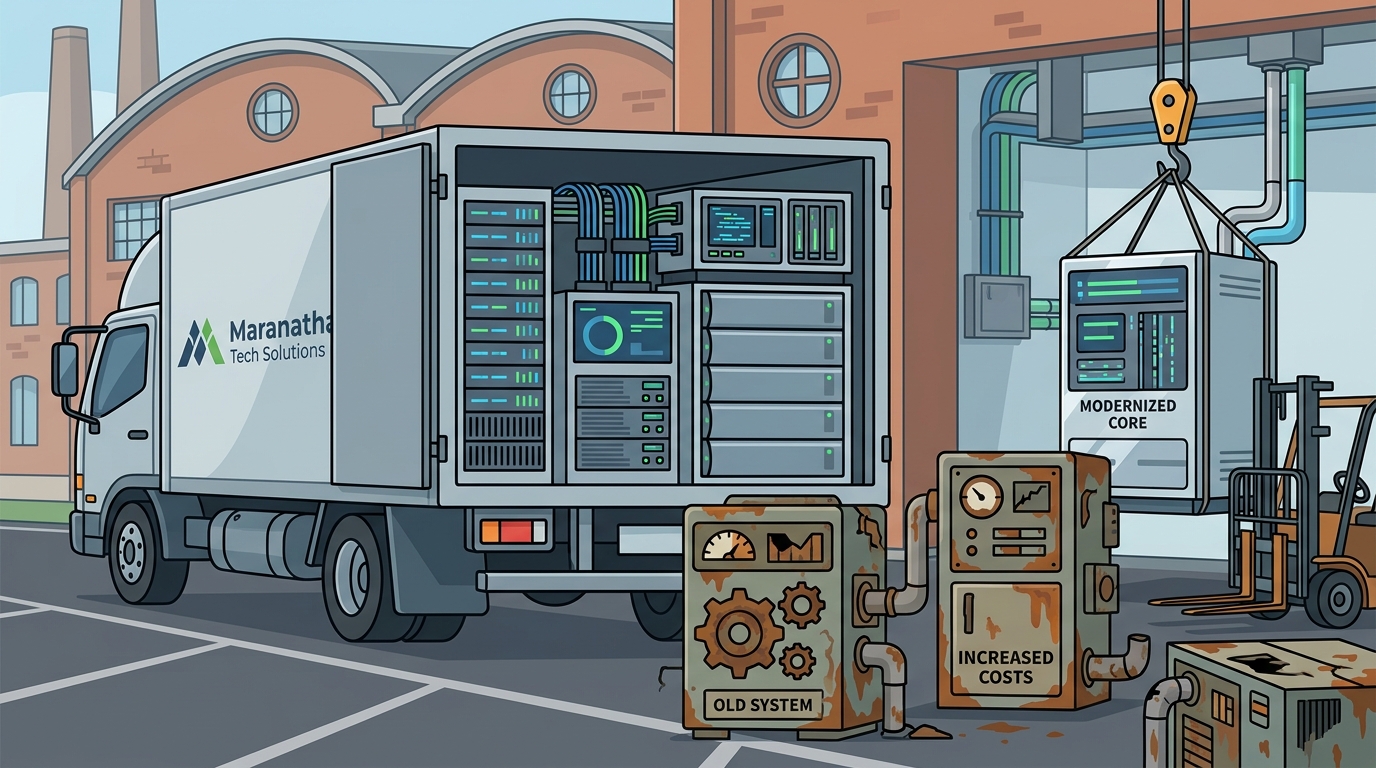
While it may seem cheaper to keep an old system running, the hidden costs are substantial. Specialized technicians who understand outdated technologies are becoming harder to find and more expensive to hire. Furthermore, hardware maintenance for obsolete servers can drive up operational expenses significantly. Industry forecasts indicate that IT spending on maintenance for legacy tech will continue to rise as supply chains for older components tighten.
Assessing Your Current Infrastructure
Before initiating a replacement project, you must conduct a thorough audit of your existing environment. This phase is critical for understanding the scope of the work and identifying dependencies.
Inventory and Dependency Mapping
Start by listing every piece of hardware and software currently in use. Map out how these components interact with each other. Which applications rely on the legacy database? Which workflows break if a specific module is removed? This mapping exercise prevents accidental disruptions during the transition. At Maranatha Tech Solutions, we emphasize the importance of this due diligence to ensure no critical business function is overlooked.
Performance Benchmarking
Collect data on the current system's performance. How long does it take to process transactions? What is the downtime frequency? These metrics provide a baseline against which you can measure the success of the new system. Without this data, it is difficult to justify the investment to stakeholders or measure the return on investment post-migration.
Stakeholder Feedback
Engage with the employees who use the system daily. They often know the workarounds and pain points that technical audits miss. Their input can reveal hidden inefficiencies and help prioritize features in the new system that will have the most immediate impact on productivity.
Developing a Replacement Strategy
Once you have assessed your current state, you must choose a strategy for replacement. There are several approaches, each with distinct advantages and challenges.
The Big Bang Approach
This involves shutting down the old system and launching the new one simultaneously. While this minimizes the period of dual-operation, it carries high risk. Any unforeseen issues can halt business operations entirely. This approach is best suited for smaller systems with limited user bases.
The Phased Approach
In this model, you replace the system module by module. This reduces risk by allowing you to test each component before moving to the next. It also allows users to adapt gradually to the new interface. However, it requires careful planning to ensure that the old and new systems can communicate during the transition period.
The Parallel Run
Here, both systems run simultaneously for a set period. This provides a safety net, as you can revert to the old system if the new one fails. However, it doubles the workload for staff during the transition and can be costly. Forbes reports that parallel runs are often necessary for mission-critical financial systems to ensure data integrity.
Cloud Migration
Many modern replacements involve moving from on-premise servers to cloud-based solutions. This offers scalability, automatic updates, and reduced hardware maintenance. For businesses in Westfield, Indiana, and surrounding areas, cloud migration can significantly reduce the need for physical IT infrastructure.
Implementation and Migration
Implementation is the execution phase of your strategy. It requires precise coordination and expert technical oversight.
Data Migration
Moving data from an old system to a new one is often the most complex part of the process. Data must be cleaned, transformed, and loaded into the new format. Errors in this phase can lead to data loss or corruption. Custom software development services often include specialized data migration protocols to ensure accuracy and completeness.
User Training
Even the best system will fail if users do not know how to use it. Comprehensive training programs are essential. This includes hands-on workshops, documentation, and ongoing support. Investing in user adoption ensures that the new system delivers the expected productivity gains.
Testing and Quality Assurance
Before going live, rigorous testing must be conducted. This includes functional testing, performance testing, and security testing. Identify and resolve any bugs or issues before they impact live operations. Our portfolio of work demonstrates our commitment to delivering robust, tested solutions that meet enterprise-level standards.
Long-Term Benefits of Modernization
Successfully replacing legacy systems yields significant long-term benefits for your organization.
Enhanced Security
Modern systems come with built-in security features such as multi-factor authentication, encryption, and real-time threat monitoring. This protects your sensitive data and reduces the risk of costly breaches.
Improved Scalability
New systems are designed to grow with your business. Whether you are adding new users, expanding to new markets, or increasing transaction volumes, modern infrastructure can handle the load without significant re-engineering.
Cost Savings
While the initial investment is substantial, the long-term operational costs are often lower. Reduced maintenance, lower energy consumption, and increased efficiency contribute to a positive return on investment. McKinsey research suggests that AI-integrated systems can reduce operational costs by up to 20% over time.
Better Decision Making
Modern systems provide real-time analytics and reporting. This allows leaders to make data-driven decisions quickly, adapting to market changes with agility and precision.
Key Takeaways
- Legacy systems pose significant security risks and operational inefficiencies that can hinder business growth.
- A thorough assessment of current infrastructure, including dependency mapping and performance benchmarking, is essential before starting a replacement project.
- Strategies for replacement include the Big Bang, Phased, Parallel Run, and Cloud Migration approaches, each with distinct risk profiles.
- Data migration is a critical phase that requires careful planning to ensure data integrity and completeness.
- User training and adoption are vital for the success of any new system implementation.
- Modern systems offer enhanced security, scalability, and cost savings over the long term.
- Partnering with experienced providers like Maranatha Tech Solutions can streamline the transition and ensure enterprise-grade results.
Frequently Asked Questions
How long does it take to replace a legacy system?
The timeline varies depending on the complexity of the system and the chosen strategy. Smaller projects may take a few months, while large-scale enterprise migrations can take six to twelve months or longer.
What is the most common risk in legacy system replacement?
Data loss or corruption during migration is one of the most significant risks. Thorough testing and backup procedures are essential to mitigate this.
Can we migrate to the cloud without replacing the underlying application?
Yes, this is known as "lift and shift" migration. However, to fully realize the benefits of cloud computing, such as scalability and cost efficiency, refactoring the application may be necessary.
How do we ensure user adoption of the new system?
Involve users early in the process, provide comprehensive training, and offer ongoing support. Demonstrating the benefits of the new system to daily workflows is also crucial.
What are the signs that a system is too legacy to maintain?
Signs include frequent downtime, inability to integrate with modern tools, high maintenance costs, and lack of vendor support.
Is it better to build custom software or buy off-the-shelf?
This depends on your specific business needs. Off-the-shelf solutions are faster to deploy but may lack customization. Custom software offers tailored functionality but requires more time and investment. Our web development services help clients evaluate these options.
How can we minimize downtime during the transition?
Use a phased approach or parallel run strategy. Plan migrations during off-peak hours and have a rollback plan in place.
Ready to Modernize Your Infrastructure?
Replacing legacy systems is a transformative journey that can unlock new levels of efficiency and growth for your business. Whether you are in Indianapolis, Westfield, or anywhere in Central Indiana, expert guidance is essential for success. Schedule a consultation today to discuss your technology goals and discover how we can help you build a future-ready organization.