
How to Choose a Custom Software Development Partner for Your Indianapolis Nonprofit
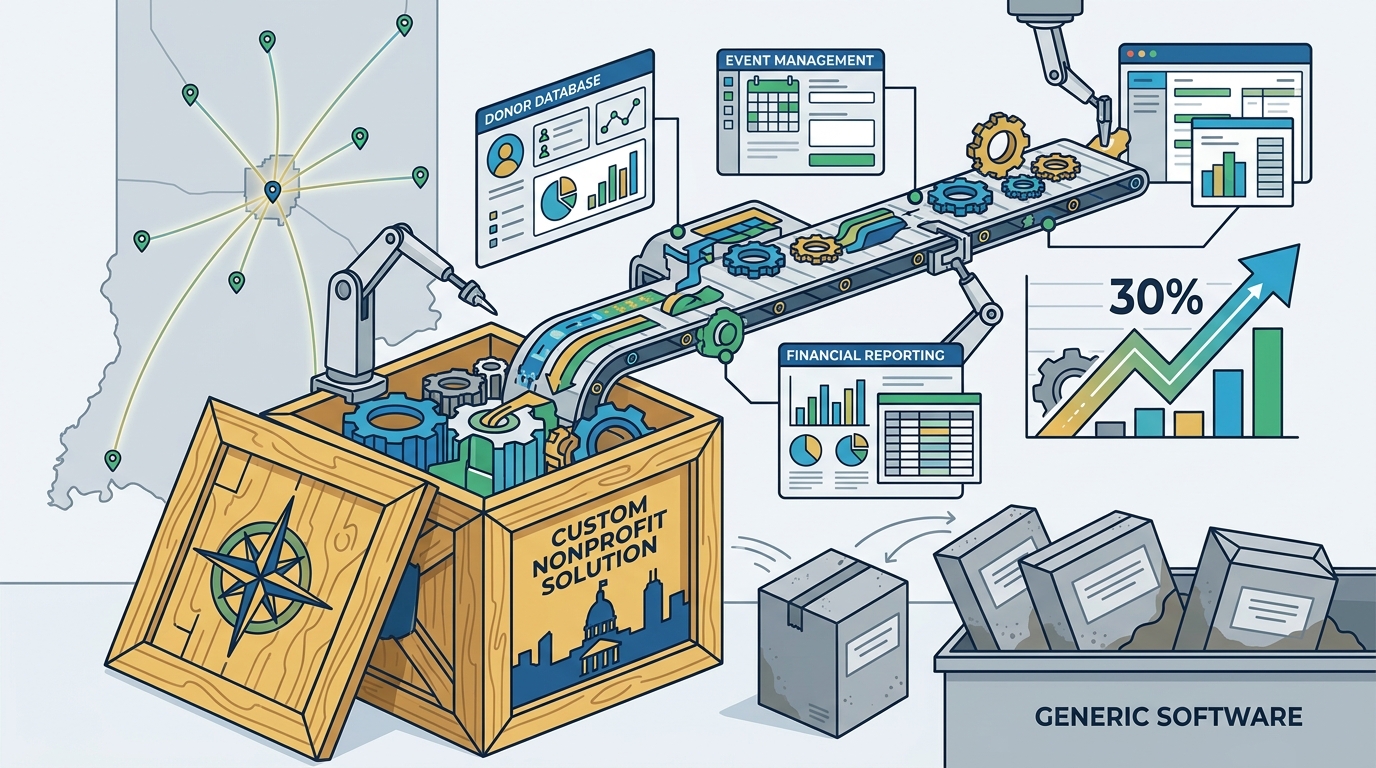
Nonprofits in Central Indiana face unique technical challenges that generic software vendors often overlook. According to recent industry data, organizations that implement tailored digital solutions see an average efficiency gain of 30% in operational workflows. This statistic highlights why a one-size-fits-all approach fails mission-driven entities. You need a partner who understands both the technical stack and the ethical constraints of your sector. This guide outlines the critical steps to finding that partner in the Indianapolis market. (Contact Us for IT)
Understanding Unique Nonprofit Technical Needs
Nonprofits operate under strict regulatory and ethical guidelines. Custom software must adhere to data privacy standards such as GDPR for international donors and local Indiana regulations. Data integrity is not optional; it is a fiduciary responsibility. Generic templates often lack the granular control required for donor management, grant tracking, and volunteer coordination. (Custom Software Web amp)
When evaluating potential partners, ask about their experience with multi-tenant architectures. This structure allows for scalable, secure data isolation between different departments or chapters of your organization. A partner who understands this distinction will propose solutions that grow with you rather than requiring a complete rebuild in three years. (Software Engagement Models amp)
Furthermore, consider the long-term maintenance of your software. Nonprofits often have limited internal IT staff. Your partner must provide clear documentation and knowledge transfer. Without this, you risk vendor lock-in, where only the original developer can make necessary updates or fixes.
Evaluating Engineering Expertise and Stack
The technology stack you choose dictates the future flexibility of your platform. Modern, production-grade frameworks offer better security patches and community support than legacy systems. Look for partners who utilize TypeScript, React, and Node.js for web applications. These tools provide type safety and component reusability, which reduces long-term technical debt.
Cloud infrastructure is another critical factor. AWS and Google Cloud Platform offer robust compliance certifications that are essential for handling sensitive donor information. A qualified partner should be able to explain their DevOps pipeline, including how they handle continuous integration and deployment. This ensures that updates are rolled out smoothly without disrupting your daily operations.
Database design is equally important. PostgreSQL is a standard for relational data due to its reliability and complex query capabilities. If your nonprofit deals with unstructured data, such as multimedia donor stories, a hybrid approach using EdgeDB or similar technologies might be necessary. Ask your potential partner to justify their database choice based on your specific data volume and query patterns.
Assessing Cultural and Values Alignment
For many Indianapolis nonprofits, values alignment is as important as technical skill. A partner who shares your commitment to integrity and service will be more invested in your success. They will treat your budget with the same stewardship you apply to your mission funds.
Look for firms that emphasize transparency in their communication. This includes honest pricing, clear timelines, and proactive risk management. Avoid vendors who use overly technical jargon to obscure costs or delays. A trustworthy partner explains complex concepts in plain language, ensuring your leadership team can make informed decisions.
Additionally, consider the firm's location and availability. While remote work is common, having a partner in the Westfield or Indianapolis area can facilitate crucial face-to-face meetings during the discovery phase. Local presence often correlates with a deeper understanding of the regional nonprofit ecosystem and its specific funding landscapes.
Reviewing Relevant Case Studies and Products
Claims are easy to make; proof is hard to fabricate. Request detailed case studies that demonstrate success in the nonprofit or public sector. Look for evidence of measurable outcomes, such as reduced administrative time or increased donor retention.
Examine the firm's own product portfolio. Companies that build and operate their own software products, such as field-service management platforms or security tools, often bring a higher level of product maturity to client projects. They have lived through the challenges of scaling, user adoption, and bug fixing firsthand.
| Vendor Attribute | High-Value Indicator | Red Flag |
|---|---|---|
| Technical Stack | Modern, open-source frameworks (React, Node, AWS) | Proprietary, legacy, or unsupported technologies |
| Security | GDPR compliance, regular audits, encrypted data | Vague security policies, no mention of compliance |
| Support | Proactive monitoring, clear SLAs, local presence | Reactive-only support, hidden fees, offshore-only |
| Values | Transparent pricing, mission-aligned, ethical practices | Pressure tactics, opaque contracts, value misalignment |
When reviewing these case studies, pay attention to the longevity of the relationships. Long-term partnerships indicate that the vendor delivers ongoing value beyond the initial launch. This is particularly important for nonprofits that require continuous adaptation to changing grant requirements or program needs.
Understanding Pricing and Engagement Models
Nonprofit budgets are often fixed and competitive. It is crucial to understand how your potential partner structures their fees. Some firms offer discounted rates for certified nonprofits, while others may work on a sliding scale based on your revenue.
Be wary of fixed-price contracts for complex, undefined projects. These often lead to scope creep or compromised quality. Instead, prefer time-and-materials or milestone-based billing with clear caps. This approach allows for flexibility as your requirements evolve during the development process.
Ask about the total cost of ownership, including hosting, maintenance, and third-party API costs. A low initial development fee can be misleading if the ongoing operational costs are prohibitive. A reputable partner will provide a comprehensive financial breakdown during the proposal phase, ensuring there are no surprises later.
Making the Final Decision
After narrowing down your list to two or three candidates, conduct final interviews. Focus on their problem-solving approach rather than just their technical skills. Ask how they would handle a critical system failure during a major fundraising campaign. Their response will reveal their preparedness and priority alignment.
Check references thoroughly. Speak to former clients, particularly those in the nonprofit sector. Ask about the vendor's responsiveness, technical competence, and ethical conduct. This feedback is invaluable in predicting your future working relationship.
Finally, trust your instincts. The right partner will feel like an extension of your team. They will challenge your assumptions constructively and celebrate your successes as their own. This level of engagement is rare and worth the effort to find.
Key Takeaways
- Nonprofits require custom software that adheres to strict data privacy and ethical standards.
- Modern tech stacks like TypeScript and AWS ensure long-term scalability and security.
- Cultural alignment with values like integrity and stewardship is critical for mission-driven projects.
- Reviewing a vendor's own product portfolio reveals their product maturity and engineering quality.
- Transparent pricing models protect nonprofit budgets from hidden costs and scope creep.
- Local presence in Indianapolis can facilitate better communication and regional understanding.
- Long-term partnership indicators are more valuable than low initial bids.
Frequently Asked Questions
What is custom software development?
Custom software development is the process of designing, creating, and deploying software applications that are specifically tailored to meet the unique needs and requirements of a particular organization, rather than using off-the-shelf solutions.
Why do nonprofits need custom software?
Nonprofits often have unique workflows for donor management, grant tracking, and volunteer coordination that generic software cannot accommodate efficiently. Custom solutions streamline these processes, reducing administrative burden and allowing staff to focus on the mission.
How much does custom software cost for a nonprofit?
Costs vary widely based on complexity, but nonprofits can often access discounted rates or sliding-scale pricing from ethical partners. It is essential to request a detailed breakdown of development, hosting, and maintenance costs to understand the total investment.
What technical stack is best for nonprofit websites?
Modern, secure, and scalable stacks like React, Node.js, and PostgreSQL are highly recommended. These technologies offer robust community support, security updates, and flexibility for future growth.
How long does it take to build custom software?
Timelines depend on the scope, but a typical MVP (Minimum Viable Product) can take 3 to 6 months. Complex enterprise-level systems may take longer. A reputable partner will provide a realistic timeline during the discovery phase.
Can a local Indianapolis developer understand our needs?
Yes, local developers often have a deeper understanding of the regional nonprofit ecosystem, funding landscapes, and regulatory environment. They are also more accessible for face-to-face meetings and urgent support.
What is the role of AI in nonprofit software?
AI can automate routine tasks like donor communication, data entry, and impact reporting. However, it must be implemented ethically to ensure data privacy and avoid bias in decision-making processes.
Start Building Your Solution Today
Choosing the right partner is a pivotal moment for your nonprofit's digital future. Do not settle for generic solutions when your mission demands excellence. Schedule a consultation with a team that combines enterprise-level engineering with a genuine commitment to your success. Let us help you build technology that serves your people, not the other way around.