
Building a custom software solution is no longer a luxury reserved for Fortune 500 companies. According to recent industry data, organizations that adopt tailored digital infrastructure see an average revenue growth of 20% faster than those relying on generic off-the-shelf tools. This shift is driven by the need for operational agility, data security, and seamless integration with existing business workflows. In 2026, the barrier to entry for high-quality custom development has lowered, yet the complexity of engineering robust, scalable systems remains high. This guide outlines the strategic framework for initiating, designing, and deploying a custom application that aligns with your specific business objectives. (Contact Us for IT)
Why Custom Software Outperforms Off-the-Shelf
Off-the-shelf software is designed for the lowest common denominator. It attempts to serve everyone, which often means it serves no one perfectly. Custom software is engineered around how your business actually works. This alignment eliminates the need for employees to adapt their processes to rigid software constraints, resulting in higher adoption rates and operational efficiency. (Software Engagement Models amp)
One of the primary drivers for custom development is data ownership and security. When you use a third-party SaaS platform, your sensitive business data resides on their servers, subject to their privacy policies and potential vulnerabilities. With a custom build, you maintain full control over your data architecture. This is critical for industries with strict regulatory requirements, such as healthcare or finance. Cybersecurity strategies increasingly emphasize the importance of reducing the attack surface, which custom architectures allow you to manage directly.
Furthermore, custom solutions scale with your growth. Generic tools often hit a ceiling where their pricing tiers or feature limitations become prohibitive. A custom application can be refactored and expanded as your user base grows, ensuring that your technology investment compounds in value rather than depreciating.
Defining Your Technical and Business Requirements
Before writing a single line of code, you must articulate the problem you are solving. Many projects fail not because of technical limitations, but because of ambiguous scope. The first step is to conduct a thorough audit of your current workflows. Identify the bottlenecks, the manual data entry points, and the integration gaps between your existing tools.
Custom software is bespoke applications and internal tools engineered around how your business actually works. This definition highlights the importance of process mapping. You need to document the "happy path" for every user role, but also the edge cases. What happens when the internet drops? What happens when data formats change? These scenarios dictate the robustness of your system.
It is also essential to define your non-functional requirements. These include performance metrics, such as page load times under heavy load, and security standards, such as GDPR compliance or HIPAA adherence. For example, if you are building a multi-tenant SaaS platform, you must design your database schema to ensure strict data isolation between tenants from day one. ISO 27001 standards provide a framework for managing this information security.
Selecting the Right Technology Stack
The technology stack is the foundation of your application. It determines how fast your app runs, how easy it is to maintain, and how much it costs to host. There is no single "best" stack, but there are industry standards that offer the best balance of performance, developer availability, and ecosystem support.
For modern web applications, a JavaScript-heavy stack is often preferred due to its versatility. TypeScript provides type safety, which reduces bugs in large codebases. React is a dominant choice for the frontend due to its component-based architecture and large community. On the backend, Node.js or Python are common choices. Node.js allows for full-stack JavaScript development, while Python offers superior capabilities for AI and data processing integrations.
Database selection is equally critical. PostgreSQL is a robust, open-source relational database that handles complex queries and large datasets efficiently. For applications requiring high-speed caching, Redis is often integrated. If you are building a real-time application, such as a chat platform or live dashboard, technologies like WebSockets or GraphQL can optimize data flow. PostgreSQL development trends show a significant increase in adoption for enterprise-grade applications due to its reliability and JSONB support.
Cloud infrastructure is the delivery mechanism. AWS, Google Cloud, and Azure offer scalable compute and storage resources. Choosing a cloud provider depends on your existing relationships, cost structures, and specific service needs, such as serverless computing or machine learning APIs. Cloud architecture best practices emphasize designing for failure, using auto-scaling groups, and implementing multi-region redundancy for critical systems.
The Development Lifecycle: From MVP to Scale
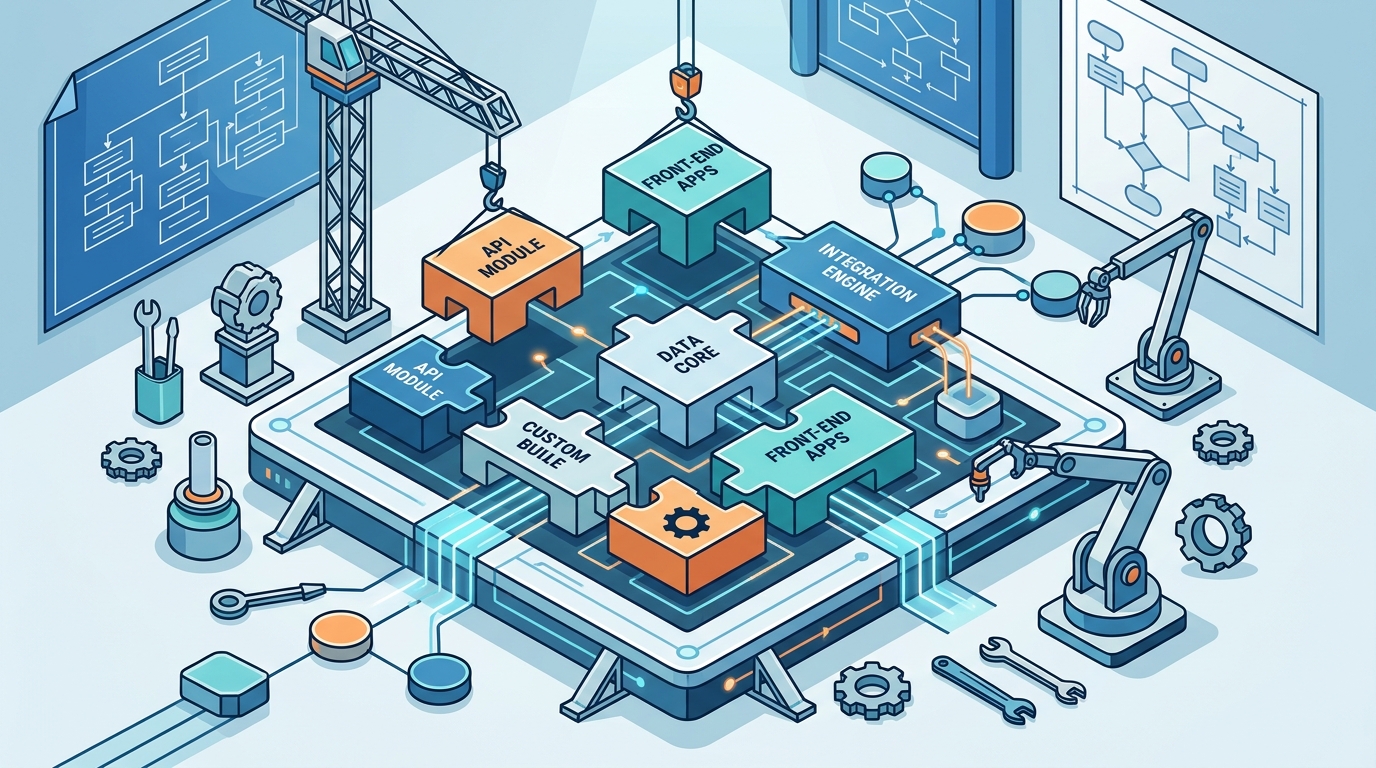
Building custom software is an iterative process. The most effective approach is to start with a Minimum Viable Product (MVP). An MVP includes only the core features necessary to solve the primary problem. This allows you to validate your assumptions with real users before investing in a full-scale build.
The development phase typically follows an Agile methodology. This involves breaking the project into sprints, usually two weeks long. Each sprint delivers a potentially shippable increment of the software. This approach allows for flexibility. If user feedback suggests a feature is not valuable, it can be deprioritized without derailing the entire project.
Testing is not a final step; it is integrated throughout the lifecycle. Automated testing ensures that new code does not break existing functionality. Security testing, including penetration testing, should be conducted before launch to identify vulnerabilities. OWASP Top Ten lists the most critical security risks for web applications, providing a checklist for developers to mitigate these threats.
Deployment should be automated using CI/CD (Continuous Integration/Continuous Deployment) pipelines. This reduces human error and allows for frequent, reliable updates. Once the MVP is live, you can gather analytics and user feedback to guide the next phase of development. This data-driven approach ensures that every feature added delivers measurable value.
Understanding Cost and Timeline Variables
The cost of custom software varies widely based on complexity, scope, and the engineering team's location. A simple internal tool might cost between $10,000 and $25,000, while a complex multi-tenant SaaS platform can range from $50,000 to over $100,000. It is crucial to view this as an investment rather than an expense. The ROI comes from increased efficiency, new revenue streams, and competitive advantage.
Timeline is another critical factor. A typical MVP can be built in 3 to 6 months. However, this depends on the clarity of requirements and the responsiveness of the development team. Delays often occur when scope creep sets in. To mitigate this, establish a strict change management process. Any new feature request should be evaluated for its impact on the timeline and budget before being added.
Choosing the right development partner is as important as the technology stack. Look for a team with enterprise-level engineering experience. They should understand not just how to code, but how to design systems that are secure, scalable, and maintainable. Gartner reports that IT consulting firms with deep technical expertise deliver projects with higher success rates and better alignment with business goals.
Key Takeaways
- Strategic Alignment: Custom software is designed to fit your unique business processes, unlike off-the-shelf solutions that force you to adapt.
- Data Security: Building your own solution gives you full control over data privacy and compliance, reducing third-party risk.
- Scalability: A custom architecture can grow with your business, avoiding the limitations and cost spikes of generic SaaS tiers.
- Technology Choices: Modern stacks like TypeScript, React, and Node.js offer robust performance and a large talent pool for maintenance.
- Agile Development: Starting with an MVP allows for rapid validation and reduces the risk of building unwanted features.
- Investment Value: While initial costs are higher, the long-term ROI through efficiency gains and competitive advantage is significant.
- Partner Selection: Choose a development team with enterprise experience to ensure your software is built to last.
Frequently Asked Questions
How long does it take to build custom software?
The timeline depends on the complexity of the project. A simple MVP typically takes 3 to 6 months, while more complex enterprise systems can take 6 to 12 months or longer. Clear requirements and agile methodologies help keep the project on schedule.
What is the average cost of custom software development?
Costs vary widely based on scope. Simple applications may start around $10,000, while complex SaaS platforms can exceed $100,000. It is important to get a detailed quote based on your specific requirements to understand the investment.
Can custom software integrate with existing tools?
Yes, one of the primary benefits of custom software is seamless integration. Developers can build APIs to connect your new system with existing CRMs, ERPs, and other third-party services, creating a unified workflow.
Is custom software secure?
Custom software can be more secure than off-the-shelf solutions because it is built with your specific security requirements in mind. By following best practices like OWASP guidelines and using modern encryption standards, you can minimize vulnerabilities.
Do I own the code I pay for?
Typically, yes. When you hire a development firm, the contract should specify that you own the intellectual property and source code. This ensures you have full control over your asset and can maintain it independently if needed.
What technologies are best for custom development?
Popular choices include TypeScript for type safety, React for the frontend, Node.js or Python for the backend, and PostgreSQL for the database. The best stack depends on your specific needs, such as real-time capabilities or AI integration.
How do I choose a development partner?
Look for a team with enterprise-level engineering experience, a proven track record of shipping products, and a clear understanding of your industry. Review their portfolio and client testimonials to assess their reliability and technical expertise.
Start Your Project
Building a custom software solution is a transformative step for any business. It requires careful planning, the right technology stack, and a trusted development partner. Maranatha Tech Solutions specializes in custom software, web applications, and AI automation. We bring enterprise-level engineering experience to help you ship work that lasts. Schedule a consultation today to discuss your project and explore how we can help you achieve your technology goals.