
How to Evaluate Custom Software Providers and Tech Support Services for Your Business Needs
Choosing the right technology partner is one of the most critical decisions a business leader can make. According to recent industry analyses, companies that prioritize enterprise-grade engineering practices see a 40% higher success rate in digital transformation projects compared to those relying on generic development shops. This statistic highlights the importance of vetting providers not just for code quality, but for architectural integrity and long-term support capabilities. In this guide, we will walk you through the exact framework used by industry experts to evaluate custom software developers and IT support services.
1. Assessing Engineering Experience and Background
When evaluating a custom software provider, look beyond the surface-level portfolio. The depth of experience matters significantly. Enterprise-level engineering experience often distinguishes a robust, scalable solution from a fragile prototype. Providers with backgrounds at major tech firms or large-scale organizations bring a level of discipline and architectural rigor that is hard to replicate.
Look for specific tenure and role history. A developer who has worked on mission-critical systems at companies like Salesforce or large non-profits understands the stakes of data integrity and system uptime. This background ensures that the code they write is not just functional, but maintainable and secure.
Additionally, consider the provider's commitment to integrity and service. A values-driven partnership often correlates with better communication and fewer project surprises. For instance, providers who emphasize relationship-focused technology solutions are more likely to act as true partners rather than just vendors. You can learn more about the importance of enterprise-level engineering experience to understand how background influences code quality.
2. Evaluating Technical Stack and Architecture
The technology stack is the foundation of your software. It determines scalability, performance, and future maintainability. Modern, production-grade stacks typically include TypeScript, React, Node.js, and Python. These technologies offer a balance of speed, type safety, and community support.
Cloud infrastructure is non-negotiable. Providers should be proficient in AWS, GCP, or Azure, utilizing services like Lambda, EC2, and managed databases. This ensures your application can scale with your business growth. For example, custom software development often requires a multi-tenant SaaS architecture to serve multiple clients efficiently while maintaining data isolation.
Consider the provider's ability to integrate AI and automation. AI-native engineering is becoming a standard requirement for competitive advantage. This includes implementing LLMs for intelligent workflows or automating repetitive tasks. You can explore AI automation services to see how these technologies are applied in real-world scenarios.
3. Understanding Service Delivery Models
How a provider delivers services impacts your project's timeline and cost. There are generally three models: fixed-price, time-and-materials, and retainer-based support.
- Fixed-Price: Best for well-defined projects with clear requirements. It offers cost certainty but lacks flexibility for changes.
- Time-and-Materials: Ideal for agile development where requirements evolve. You pay for the actual work done, allowing for greater adaptability.
- Retainer-Based: Provides ongoing support and maintenance. This model ensures priority access to developers and continuous system optimization.
For complex custom software, a hybrid approach is often best. Start with a discovery phase to define scope, then move to agile development. Pricing structures should be transparent and aligned with your budget and timeline. Providers who offer clear budget tiers, such as under $10k for MVPs or $100k+ for enterprise solutions, help you plan effectively.
4. Security, Compliance, and Data Privacy
Security is not an afterthought; it is a core component of software engineering. Providers must adhere to strict security protocols, including GDPR compliance, secure API integration, and vulnerability remediation. According to cybersecurity reports, 60% of small businesses that suffer a major cyber attack close within six months, making proactive security essential.
Look for specific security certifications and practices. Providers should use encrypted data storage, implement multi-factor authentication, and conduct regular security audits. For example, web development services must include secure coding practices to prevent common vulnerabilities like SQL injection and cross-site scripting (XSS).
Data privacy is also critical. Ensure the provider has a clear privacy policy and handles data in compliance with local and international regulations. You can read more about contacting providers to discuss your specific security requirements and compliance needs.
5. Comparison of Provider Types
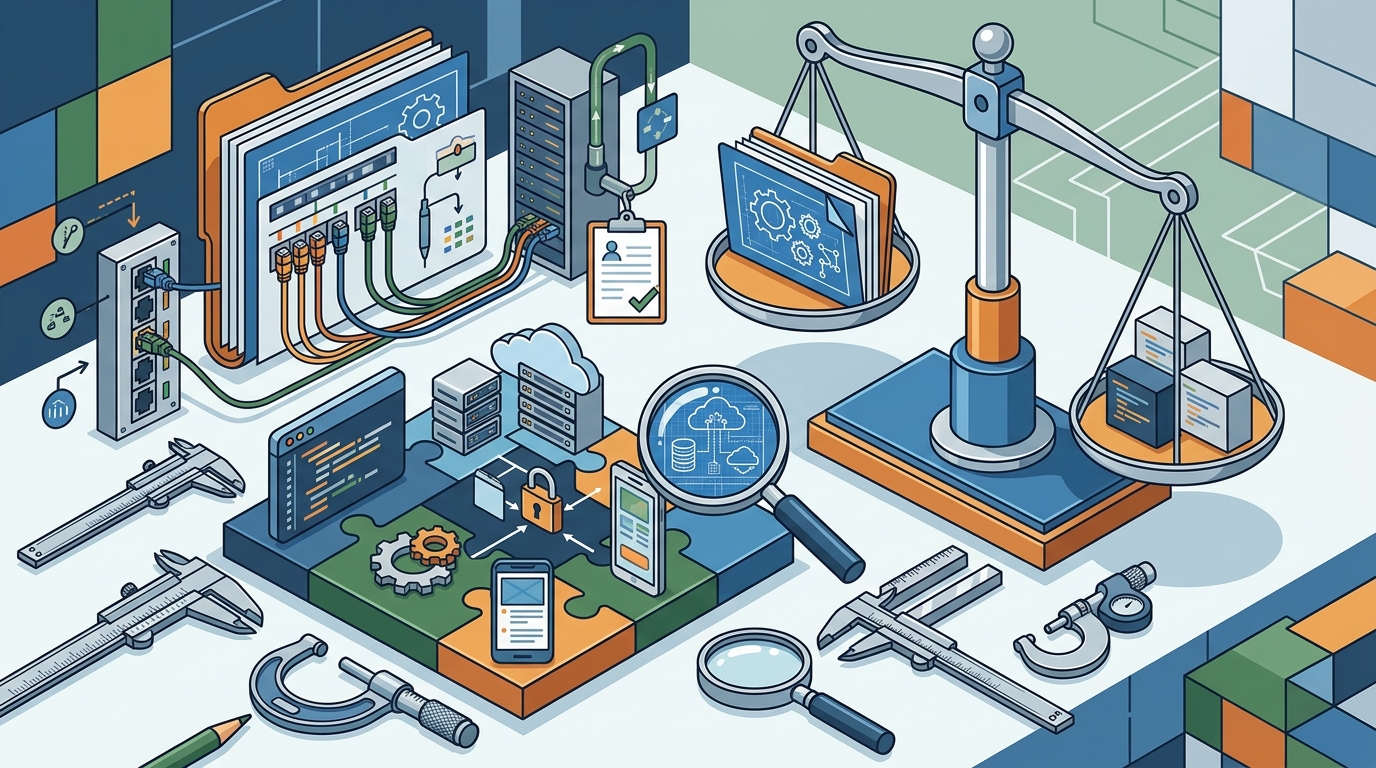
To help you make an informed decision, here is a comparison of different types of technology providers:
| Provider Type | Best For | Pros | Cons |
|---|---|---|---|
| Custom Software Agency | Unique business needs, complex workflows | Tailored solutions, high quality | Higher cost, longer timeline |
| Managed IT Service | Ongoing support, infrastructure management | Proactive monitoring, fast response | Less focus on new development |
| SaaS Product Vendor | Standard industry problems | Quick deployment, lower cost | Limited customization |
| Freelance Developer | Small, well-defined tasks | Cost-effective, flexible | Limited scalability, risk of availability |
6. Key Takeaways
- Experience Matters: Look for providers with 15+ years of experience in enterprise environments.
- Stack Flexibility: Ensure the provider uses modern, scalable technologies like TypeScript, React, and AWS.
- Security First: Verify GDPR compliance and robust security practices to protect your data.
- Transparent Pricing: Choose a provider with clear budget tiers and no hidden fees.
- Partnership Mindset: Select a partner who values integrity and long-term relationship building.
- AI Integration: Consider providers who offer AI automation to enhance your business efficiency.
- Local Support: For businesses in Central Indiana, local providers offer faster on-site support.
7. Frequently Asked Questions
What is the typical timeline for custom software development?
Timelines vary based on complexity. Simple web applications may take 1-3 months, while complex SaaS platforms can take 6+ months. A detailed project plan is provided after the initial consultation.
How do you ensure data security during development?
We implement secure coding practices, use encrypted data storage, and conduct regular security audits. Our builds are GDPR-compliant and follow industry best practices for data protection.
Do you offer ongoing support after launch?
Yes, we offer both one-time services and ongoing support plans. Our managed IT services provide continuous monitoring, maintenance, and support for a fixed monthly fee.
What technologies do you specialize in?
We specialize in TypeScript, React, Node.js, Python, PostgreSQL, and AWS. Our team is also experienced in AI automation and LLM integration.
Can you help with both hardware and software issues?
Yes, we provide comprehensive IT support covering hardware, software, networking, security, and more. Our team has the expertise to address virtually any technical issue your business might face.
What areas do you serve?
We serve Indianapolis, Westfield, Carmel, Fishers, Noblesville, and surrounding areas in Central Indiana. We also provide remote support for clients across the country.
How quickly can you respond to IT issues?
We pride ourselves on fast response times. For urgent issues, we typically respond within 1-2 hours during business hours and offer 24/7 emergency support for critical systems.
8. Next Steps
Evaluating custom software providers requires a careful balance of technical expertise, security awareness, and partnership values. By following this guide, you can identify a provider that aligns with your business goals and technical needs. If you are ready to start your project, we invite you to schedule a consultation with our team. We will follow up within one business day to discuss your vision and provide a tailored proposal.