
Custom Software Development Pricing for Small Businesses in Westfield
For small business owners in Westfield, Indiana, the cost of custom software is often the primary barrier to digital transformation. According to recent industry data, custom software development costs for small businesses typically range from $10,000 to $100,000+, depending on complexity and feature requirements. This wide variance can be confusing for local entrepreneurs who need predictable budgeting. Understanding the specific drivers of these costs allows business leaders to align their technology investments with their actual operational needs rather than guessing at arbitrary figures. (Contact Us for IT)
Understanding Cost Drivers in Custom Software
Custom software development pricing is not a one-size-fits-all metric. The final cost is determined by several critical factors that influence the engineering effort required. For small businesses in Westfield, recognizing these drivers helps in setting realistic expectations before engaging a development partner. (Custom Software Web amp)
Complexity and Feature Set
At its core, complexity is the primary determinant of cost. A simple internal tool for tracking inventory will cost significantly less than a multi-tenant SaaS platform with real-time data synchronization. The number of user roles, the depth of integrations with existing systems, and the sophistication of the user interface all add layers of engineering time. (Software Engagement Models amp)
Technology Stack Selection
The choice of technology stack impacts both development speed and long-term maintenance costs. Modern stacks like TypeScript, React, and Node.js offer robust ecosystems that can accelerate development. However, specialized requirements might necessitate more complex architectures, such as microservices or specific database solutions like PostgreSQL, which require specialized engineering expertise.
Regulatory Compliance and Security
For businesses handling sensitive data, compliance with regulations like GDPR or HIPAA adds significant cost. Security measures, including vulnerability remediation and secure API integration, are not optional extras but foundational requirements. Enterprise-level engineering experience ensures that these security protocols are built into the architecture from day one, rather than bolted on later.
Budget Tiers for Westfield Businesses
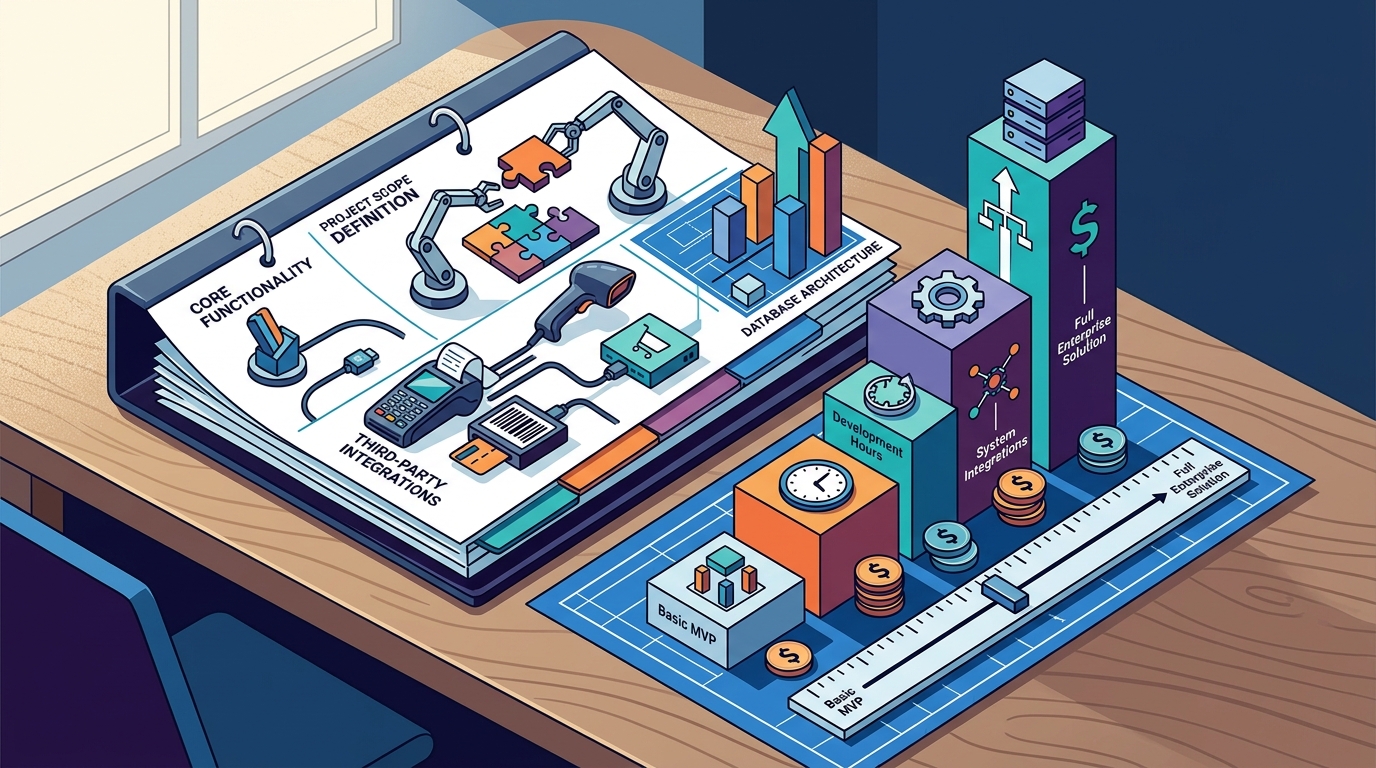
Small businesses in Westfield typically fall into specific budget categories when seeking custom software solutions. Understanding these tiers helps in aligning your project scope with your financial resources.
| Budget Tier | Estimated Cost | Typical Use Case | Timeline |
|---|---|---|---|
| Starter MVP | $10,000 - $25,000 | Basic web app, lead capture site, simple automation | 1-3 months |
| Growth Platform | $25,000 - $50,000 | Custom CRM, multi-user portal, API integrations | 3-6 months |
| Enterprise Scale | $50,000 - $100,000+ | Multi-tenant SaaS, complex AI automation, legacy migration | 6+ months |
For many local businesses, the Growth Platform tier offers the best balance of functionality and cost. It allows for robust features without the overhead of enterprise-grade complexity. However, the decision should always be driven by business needs rather than budget constraints alone.
Pricing Models Explained
When engaging with a development partner, you will typically encounter two main pricing models: Fixed Price and Time & Materials. Each has distinct advantages and risks for small businesses.
Fixed Price Contracts
A fixed price contract provides a set cost for a well-defined scope of work. This model is ideal for projects with clear requirements, such as a marketing website or a simple internal tool. The benefit is budget certainty, but the risk is that any changes to the scope can lead to costly change orders. It is crucial to have a detailed specification document before signing a fixed price contract.
Time & Materials (T&M)
Time & Materials pricing charges based on the actual hours worked by the development team. This model offers flexibility and is suitable for projects where requirements may evolve. It allows for iterative development and quick pivots based on user feedback. While it offers less initial budget certainty, it often results in a better final product because the team can adapt to changing needs without renegotiating the contract.
Hidden Costs to Avoid
Beyond the initial development costs, there are several hidden expenses that small businesses often overlook. Being aware of these can prevent budget overruns and ensure long-term project success.
Post-Launch Maintenance
Software requires ongoing maintenance to remain secure and functional. This includes server costs, bug fixes, and updates to third-party APIs. A common mistake is to budget for development but not for maintenance. Plan for at least 15-20% of the initial development cost annually for maintenance to keep your software running smoothly.
Third-Party Integrations
Many custom solutions require integration with existing tools like payment gateways, CRM systems, or email marketing platforms. These integrations may have their own licensing fees or development costs. Ensure that all third-party costs are accounted for in your initial budget.
Content Migration and Training
If you are replacing an existing system, the cost of migrating data and training your staff on the new software can be significant. These costs are often underestimated but are critical for a successful launch. Factor in time for user training and support during the initial rollout phase.
Calculating ROI for Custom Solutions
Investing in custom software is an investment in your business's efficiency and growth. To justify the cost, it is essential to calculate the Return on Investment (ROI). This involves comparing the cost of the custom solution against the cost of existing processes or off-the-shelf software.
Efficiency Gains
Custom software can automate repetitive tasks, reduce manual errors, and streamline workflows. For example, a custom field-service management platform can reduce administrative time by up to 30%. Calculate the hourly cost of your employees and multiply it by the hours saved to determine the annual savings.
Scalability and Growth
Off-the-shelf software often hits a ceiling where it can no longer meet your growing needs. Custom software can scale with your business, allowing you to add features and users without significant additional cost. This scalability supports long-term growth and prevents the need for costly system replacements in the future.
Competitive Advantage
Custom software can provide a unique competitive advantage by offering features that competitors cannot match. This could be a proprietary algorithm, a unique user experience, or specialized integrations. The value of this advantage is difficult to quantify but can be substantial in terms of customer acquisition and retention.
Frequently Asked Questions
How much does custom software development cost for a small business in Westfield?
The cost typically ranges from $10,000 for a simple MVP to over $100,000 for complex enterprise solutions. The final price depends on the complexity, features, and technology stack required for your specific project.
What is the difference between fixed price and time & materials pricing?
Fixed price pricing offers a set cost for a defined scope, while time & materials pricing charges based on actual hours worked. Fixed price is better for well-defined projects, while T&M offers more flexibility for evolving requirements.
How long does it take to develop custom software?
Development timelines vary based on complexity. A simple web app may take 1-3 months, while a complex SaaS platform can take 6+ months. It is important to allow sufficient time for testing and refinement.
Do I need to maintain the software after it is built?
Yes, ongoing maintenance is essential for security and functionality. This includes bug fixes, updates, and server management. Plan for annual maintenance costs of 15-20% of the initial development cost.
Can I start with a smaller MVP and add features later?
Absolutely. Starting with a Minimum Viable Product (MVP) allows you to test your idea with minimal investment. You can then add features based on user feedback and business growth.
What technologies are commonly used for custom software?
Common technologies include TypeScript, React, Node.js, Python, and PostgreSQL. The choice of stack depends on the project requirements, scalability needs, and team expertise.
Next Steps for Your Project
Ready to explore how custom software can transform your Westfield business? Maranatha Tech Solutions offers enterprise-level engineering experience with a personalized approach. We specialize in custom software, web applications, and AI automation tailored to your unique needs.
Whether you are looking to build a multi-tenant SaaS platform, a custom CRM, or an AI-driven automation tool, our team is here to help. We provide a free initial consultation to discuss your IT needs and project goals. Schedule a meeting today to get started on your custom software journey.