
Essential Criteria for Evaluating Custom Software Development Partners
Choosing the right technology partner is one of the most critical decisions a business leader will make. According to recent industry analyses, Gartner reports that over 70% of digital transformation initiatives fail to meet their original objectives due to poor vendor selection and misaligned technical strategies. This statistic highlights a fundamental truth: technical capability alone is not enough. You need a partner who combines enterprise-grade engineering with a genuine product mindset. This guide outlines the essential criteria for evaluating custom software development partners, ensuring you select a team that delivers lasting value. (Contact Us for IT)
Technical Expertise and Stack Alignment
The first criterion is technical proficiency. However, "proficiency" is often misunderstood. It is not about knowing every language, but about mastering the right tools for your specific problem. Custom software development requires a deep understanding of modern architectures, including microservices, serverless computing, and cloud-native deployments. (About Maranatha Tech Solutions)
Modern Stack Requirements
When evaluating a partner, ask about their primary technology stack. A robust partner should be fluent in TypeScript, React, Node.js, and Python. These languages offer the scalability and maintainability required for long-term growth. For instance, Stack Overflow's 2023 developer survey indicates that TypeScript remains one of the most loved and widely used languages for building scalable web applications. (Custom Software Web amp)
Database selection is equally critical. PostgreSQL is the industry standard for relational data due to its reliability and extensibility. For complex, graph-based relationships, EdgeDB or Neo4j might be necessary. A qualified partner will explain why they chose a specific database over another, demonstrating their architectural reasoning.
Cloud Infrastructure Proficiency
Cloud infrastructure is the backbone of modern software. Look for partners with certified expertise in AWS, Google Cloud Platform (GCP), or Azure. Specifically, ask about their experience with Infrastructure as Code (IaC) tools like AWS CDK or CloudFormation. These tools ensure that your deployment processes are repeatable, secure, and auditable.
Technical Stack Comparison
| Technology Area | Recommended Standard | Why It Matters |
|---|---|---|
| Frontend Framework | React / Next.js | Component reusability and server-side rendering for performance. |
| Backend Language | Node.js / Python | Scalability and extensive library ecosystems for rapid development. |
| Database | PostgreSQL / EdgeDB | Data integrity, ACID compliance, and flexible querying. |
| Cloud Provider | AWS / GCP | Global reach, security certifications, and managed services. |
Engineering Culture and Code Quality
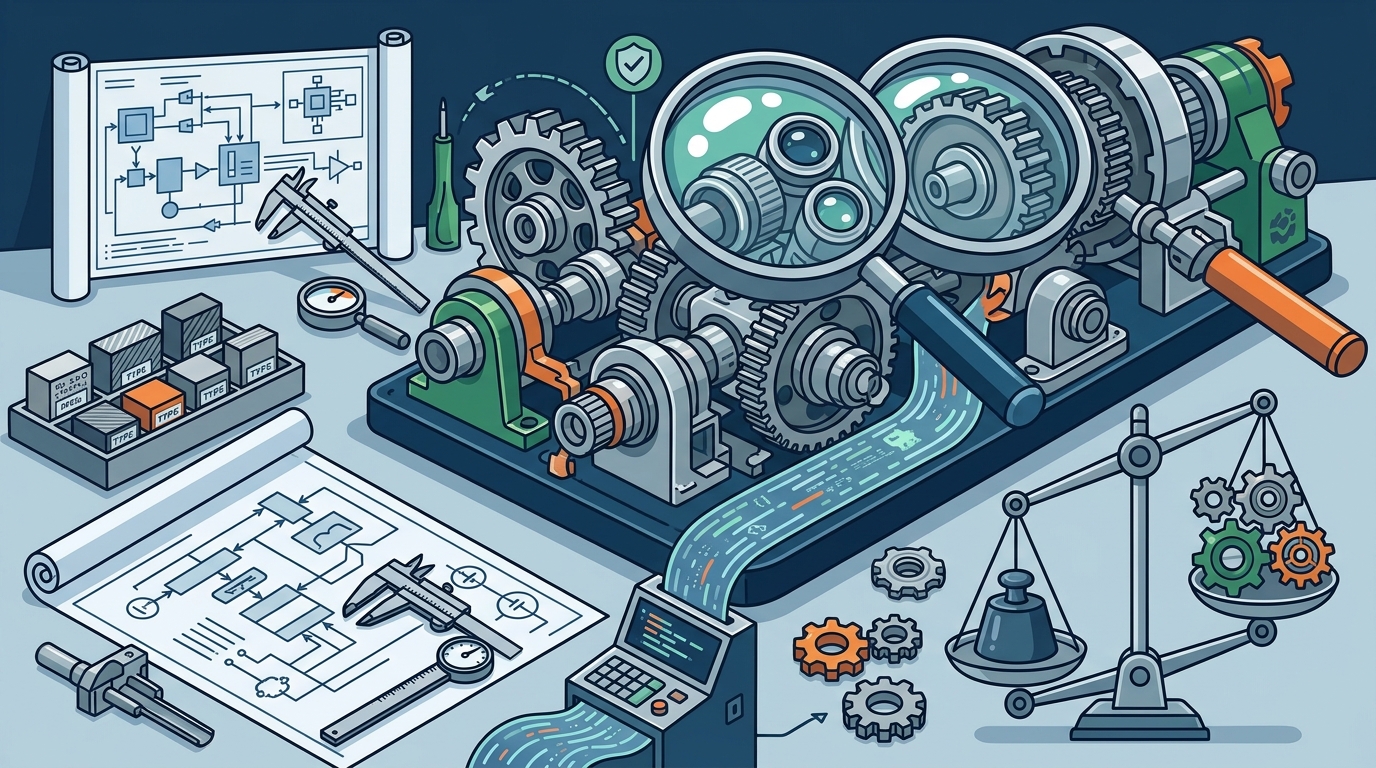
Code quality is not an afterthought; it is a cultural trait. A partner with a strong engineering culture prioritizes clean code, comprehensive testing, and continuous integration/continuous deployment (CI/CD) pipelines. This approach reduces technical debt and accelerates future feature development.
Code Review Processes
Ask potential partners about their code review process. Do they use pull requests? Is there a mandatory peer review before merging? These practices ensure that knowledge is shared across the team and that bugs are caught early. Atlassian's research on agile practices shows that teams with rigorous code review processes report fewer production incidents.
Testing Strategies
A reliable partner will have a multi-layered testing strategy. This includes unit tests for individual components, integration tests for API interactions, and end-to-end tests for user workflows. If a partner cannot articulate their testing strategy, it is a significant red flag.
Security, Compliance, and Data Privacy
Security is non-negotiable. Your custom software will handle sensitive data, whether it is customer information, financial records, or intellectual property. Evaluating a partner's security posture is essential for risk mitigation.
GDPR and Data Privacy
If you serve customers in Europe or handle EU data, GDPR compliance is mandatory. A qualified partner will design your architecture with privacy by design principles. This includes data encryption at rest and in transit, access controls, and the ability to delete user data upon request. Investopedia defines GDPR as a regulation that mandates how companies protect EU citizens' personal data.
Vulnerability Management
Ask about their vulnerability remediation process. Do they perform regular penetration testing? Do they use automated tools to scan for known vulnerabilities in dependencies? A proactive approach to security is far more cost-effective than reactive fixes.
Product Mindset vs. Vendor Mindset
One of the most critical differentiators is the partner's mindset. A vendor mindset focuses on delivering features as specified, often without considering the broader business context. A product mindset focuses on solving the user's problem and achieving business outcomes.
Strategic Partnership
Look for partners who ask "why" before "how." They should challenge your requirements if they believe there is a better way to achieve your goals. This collaborative approach leads to more innovative and effective solutions. McKinsey Digital highlights that companies adopting a product-centric approach see faster time-to-market and higher customer satisfaction.
Long-Term Support
Software is never truly "done." It requires ongoing maintenance, updates, and evolution. Choose a partner who is interested in a long-term relationship, not just a one-time transaction. They should offer clear paths for scaling and future enhancements.
Communication and Project Management
Technical excellence means nothing if the partner cannot communicate effectively. Clear, consistent communication is the glue that holds a project together.
Transparency and Reporting
Ask about their reporting cadence. Do they provide weekly progress updates? Do they use project management tools like Jira or Trello that you can access in real-time? Transparency builds trust and allows you to catch issues early.
Responsiveness
Response time is a key indicator of commitment. While you do not need 24/7 support for every query, you do need assurance that urgent issues will be addressed promptly. Forbes notes that poor communication is a leading cause of project failure in IT initiatives.
Pricing Models and Budget Transparency
Pricing structures vary widely in the software development industry. Understanding these models helps you avoid unexpected costs and align expectations.
Fixed Price vs. Time and Materials
Fixed-price contracts are suitable for well-defined projects with clear requirements. Time and materials (T&M) contracts are better for projects where requirements may evolve. A flexible partner will help you choose the right model based on your project's nature.
Value-Based Pricing
Some partners offer value-based pricing, where the cost is tied to the business value delivered. This model aligns the partner's incentives with your success. However, it requires a high level of trust and clear metrics for measuring value.
Key Takeaways
- Technical Depth: Ensure the partner is proficient in modern stacks like TypeScript, React, and AWS, as highlighted by Stack Overflow's 2023 survey.
- Security First: Verify GDPR compliance and vulnerability management practices, referencing Investopedia's definition of GDPR.
- Product Mindset: Prioritize partners who ask "why" and focus on business outcomes, a trend supported by McKinsey Digital.
- Communication: Demand transparency in reporting and responsiveness, as Forbes identifies communication as a critical success factor.
- Code Quality: Insist on rigorous code review and testing processes to minimize technical debt.
- Long-Term Vision: Choose a partner interested in ongoing support and evolution, not just initial delivery.
- Clear Pricing: Understand the pricing model (fixed vs. T&M) and ensure budget transparency from day one.
Frequently Asked Questions
What is the most important factor when choosing a software development partner?
The most important factor is alignment of values and technical expertise. A partner must understand your business goals and have the technical skills to execute them effectively.
How do I verify a partner's technical capabilities?
Review their portfolio, ask for code samples, and conduct technical interviews with their engineers. Look for evidence of modern stack proficiency and security practices.
What is the difference between fixed-price and time-and-materials pricing?
Fixed-price contracts have a set cost for a defined scope, while time-and-materials contracts bill based on the actual time and resources used, offering more flexibility.
Why is GDPR compliance important for custom software?
GDPR compliance ensures that your software handles personal data in accordance with European regulations, avoiding significant legal penalties and building user trust.
How often should I expect progress updates from my development partner?
Weekly updates are standard, but the frequency should be agreed upon during the onboarding process. Real-time access to project management tools is also recommended.
Can a small team build enterprise-grade software?
Yes, if the team has the right expertise and processes. Enterprise-grade quality is about architecture and code standards, not just team size.
What should I do if my project scope changes?
A flexible partner will work with you to assess the impact of scope changes on timeline and budget, adjusting the plan accordingly.
Start Your Project
Evaluating custom software development partners requires a holistic approach that balances technical expertise, cultural fit, and strategic alignment. By focusing on these essential criteria, you can mitigate risk and ensure your project's success. If you are ready to build software that lasts, we invite you to explore our services. Visit our Services page to learn more about our approach. For a personalized consultation, schedule a meeting with our team today. We are committed to delivering enterprise-grade engineering with a genuine product mindset.