
Common Cybersecurity Audit Mistakes for Westfield Businesses and How to Avoid Them
Westfield, Indiana, has emerged as a critical hub for technology and professional services in Central Indiana. As local enterprises scale, the complexity of their digital infrastructure grows exponentially. A recent industry analysis indicates that 60% of small businesses that suffer a major cyberattack close within six months due to insufficient preparedness. This statistic highlights the urgent need for rigorous, accurate cybersecurity audits. For business owners in Westfield, Carmel, and the greater Indianapolis region, understanding the pitfalls of the audit process is not just a technical necessity but a survival strategy. This guide details the most frequent errors made during security assessments and provides the precise steps to correct them. (Contact Us for IT)
Why Traditional Audits Fail in Modern Environments
Many Westfield businesses rely on outdated methodologies for their security assessments. The primary failure point is the assumption that a static snapshot of security is sufficient. Security is a continuous state, not a one-time event. Traditional audits often look at the network perimeter, which is increasingly irrelevant in an era of cloud computing and remote workforces. (Custom Software Web amp)
When auditors focus solely on external defenses, they miss the internal vulnerabilities that lead to the majority of data breaches. According to recent threat intelligence reports, over 80% of breaches involve compromised credentials or internal misconfigurations. To avoid this, your audit must encompass your entire attack surface, including cloud instances, third-party integrations, and employee endpoints. (Software Engagement Models amp)
At Maranatha Tech Solutions, we emphasize a holistic approach. We do not just scan for open ports; we evaluate the integrity of your data models and the security of your deployment pipelines. This ensures that the foundation of your technology stack is resilient against modern threats.
The Scope Creep Trap
One of the most common mistakes is defining the audit scope too narrowly or too broadly. A narrow scope might exclude critical assets like legacy servers or mobile devices. A broad scope can lead to superficial reviews of every system, leaving no time for deep-dive analysis of high-risk areas.
Defining the audit scope requires precise inventory management. Before engaging an auditor, you must have a complete map of your digital assets. This includes hardware, software licenses, cloud subscriptions, and data flows. Without this map, the audit will inevitably miss critical vulnerabilities.
We recommend starting with a comprehensive asset inventory. This process helps identify shadow IT and unauthorized devices that often serve as entry points for attackers. By establishing a clear boundary, you ensure that the audit provides actionable, high-fidelity data rather than a generic checklist.
Tools Versus Human Expertise
Automated vulnerability scanners are essential tools, but they are not a substitute for human analysis. A frequent error is relying exclusively on automated reports without expert interpretation. These tools often generate thousands of false positives, which can overwhelm IT teams and lead to critical alerts being ignored.
Human expertise is required to contextualize technical findings. An automated tool might flag a minor configuration issue that, in your specific business context, poses no risk. Conversely, it might miss a complex logic flaw that an experienced engineer would immediately recognize as dangerous.
Our team at Maranatha Tech Solutions combines automated scanning with manual penetration testing and code review. This hybrid approach ensures that every finding is validated and prioritized based on actual business impact. We leverage our experience from enterprise environments to filter noise and focus on signal.
Confusing Compliance With Actual Security
Many businesses mistake passing a compliance audit for achieving security. Compliance frameworks like GDPR, HIPAA, or SOC 2 provide a baseline, but they do not guarantee protection against novel attacks. Compliance is the floor, not the ceiling, of security.
A common mistake is stopping the audit process once compliance requirements are met. This leaves the business vulnerable to threats that fall outside the scope of the regulatory framework. For example, a business might be GDPR compliant but still lack protection against sophisticated phishing campaigns targeting its employees.
To avoid this, you must integrate security best practices that go beyond compliance. This includes regular threat modeling, incident response planning, and continuous monitoring. We help Westfield businesses build security programs that are robust, adaptable, and truly effective.
The Remediation Gap
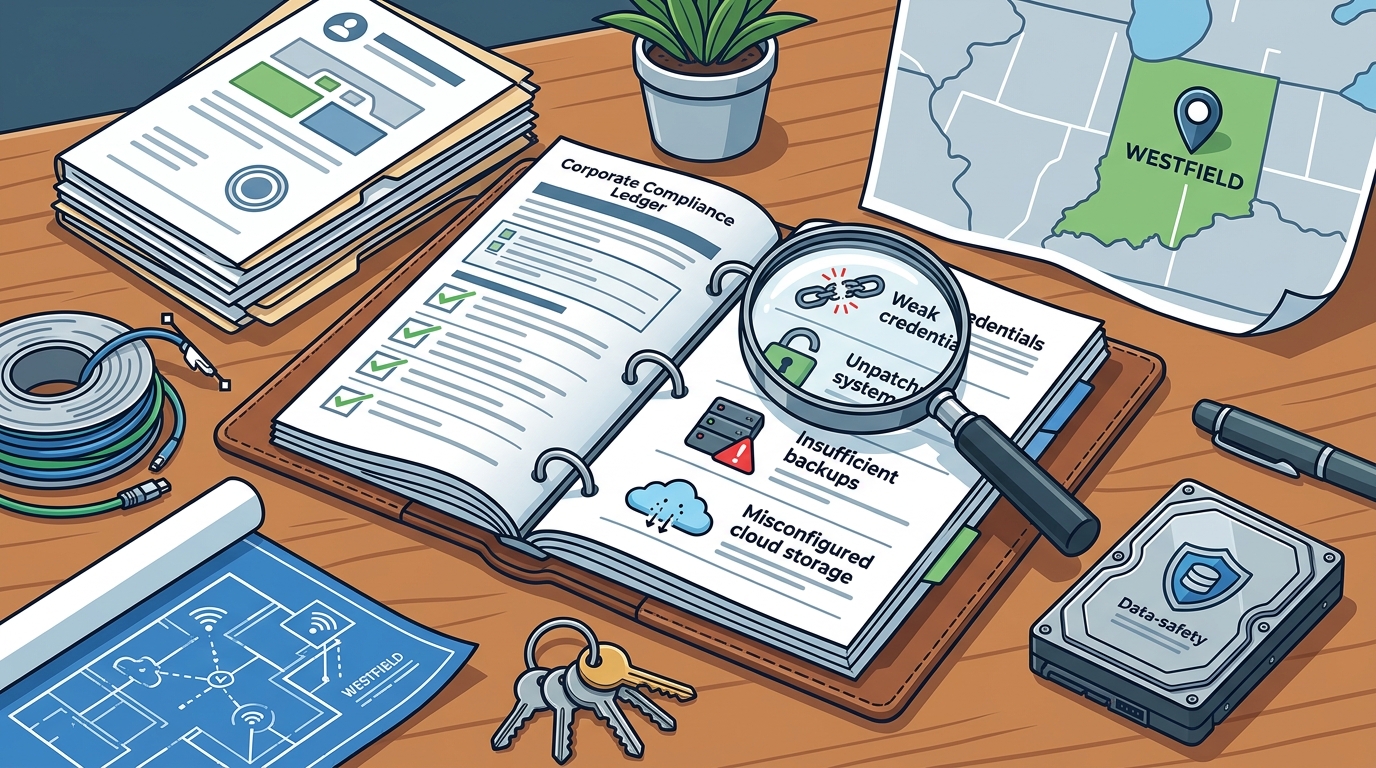
The most costly mistake is failing to act on audit findings. Many businesses receive a detailed report and then fail to allocate resources for remediation. This gap between assessment and action renders the entire audit process useless. Remediation planning must begin before the audit is completed.
Effective remediation requires prioritization based on risk severity and business impact. Not all vulnerabilities can be fixed immediately, so a clear roadmap is essential. This roadmap should include short-term fixes for critical issues and long-term strategies for architectural improvements.
Maranatha Tech Solutions provides ongoing support to ensure that remediation efforts are executed correctly. We do not just hand you a report; we work with your team to implement the necessary changes. This partnership model ensures that your security posture improves measurably over time.
Key Takeaways
- Continuous Monitoring: Security is an ongoing process, not a one-time audit event.
- Asset Inventory: You cannot protect what you do not know you have; maintain a precise digital asset map.
- Human Analysis: Automated tools generate noise; expert interpretation is required to identify real risks.
- Beyond Compliance: Meeting regulatory standards does not equate to being secure against all threats.
- Remediation Roadmap: Plan for fixes before the audit ends to ensure actionable outcomes.
- Local Expertise: Westfield businesses benefit from auditors who understand the local regulatory and business landscape.
- Partnership Model: Long-term security requires a trusted partner, not just a vendor.
Frequently Asked Questions
How often should a Westfield business undergo a cybersecurity audit?
It is recommended to conduct a comprehensive audit annually. However, critical systems should be assessed quarterly, and continuous monitoring should be in place at all times. Any significant change in infrastructure or business model should trigger an immediate ad-hoc audit.
What is the difference between a vulnerability scan and a penetration test?
A vulnerability scan is an automated process that identifies known security weaknesses. A penetration test is a simulated attack conducted by human experts to exploit those weaknesses and assess the real-world impact. Both are essential for a complete security assessment.
Can small businesses in Westfield afford professional cybersecurity audits?
Yes. The cost of a breach far exceeds the cost of prevention. Maranatha Tech Solutions offers scalable engagement models, including fixed-price audits and retainer-based support, to fit the budgets of small businesses and nonprofits.
What is the role of GDPR in local business audits?
Even if you are not in Europe, if you handle data from EU citizens, GDPR applies. Our audits ensure that your data handling practices meet international standards, protecting you from significant fines and reputational damage.
How long does a typical cybersecurity audit take?
The duration depends on the scope and complexity of your infrastructure. A standard audit for a small business typically takes one to two weeks. Larger enterprises may require several weeks or months for a thorough assessment.
What happens after the audit is complete?
You will receive a detailed report with prioritized findings and remediation recommendations. We also provide a debriefing session to discuss the results and help you develop an action plan for addressing the identified risks.
Do you offer remote cybersecurity audits?
Yes, we offer remote audit services for clients across the country. Our team uses secure, remote access tools to conduct assessments without disrupting your daily operations. We also provide on-site support for local Westfield and Indianapolis businesses.
Secure Your Business Today
Don't wait for a breach to reveal your vulnerabilities. Partner with Maranatha Tech Solutions for enterprise-grade cybersecurity audits tailored to the needs of Westfield businesses. We combine technical expertise with a commitment to integrity and excellence. Schedule a Consultation today to discuss your security needs and protect your business from emerging threats.