
Common Pitfalls in Custom Software Development for Compliance and White-Label Solutions
Building custom software for regulated industries is not merely a technical exercise; it is a legal and operational imperative. According to recent industry analyses, over 60% of failed software projects stem from inadequate planning around data governance and security protocols rather than code quality issues. This statistic highlights a critical reality: technical excellence means nothing if the resulting platform violates regulatory frameworks or fails to meet white-label branding standards. Organizations must navigate a complex landscape where compliance is not an afterthought but a foundational architectural requirement. (Contact Us for IT)
Data Privacy and Regulatory Compliance Pitfalls
One of the most significant hurdles in custom software development is ensuring adherence to stringent data protection laws. Data sovereignty is the concept that data is subject to the laws of the country in which it is collected or processed. Ignoring this principle can lead to severe legal penalties and loss of customer trust. (Software Engagement Models amp)
GDPR and HIPAA Misalignment
Many development teams focus on functionality while neglecting the underlying data architecture required for compliance. For instance, healthcare applications must adhere to HIPAA regulations, which mandate strict controls over protected health information (PHI). Failure to implement proper encryption at rest and in transit is a common and costly error. Similarly, software serving European users must comply with GDPR, requiring explicit user consent mechanisms and the right to be forgotten features.
According to data from the International Association of Privacy Professionals, non-compliance fines can reach up to 4% of global annual turnover. This financial risk underscores the need for privacy-by-design principles from the initial wireframing stage. Developers must integrate compliance checks into the continuous integration and continuous deployment (CI/CD) pipeline to ensure that no code update violates regulatory standards.
Audit Trails and Logging
Another frequent oversight is the lack of comprehensive audit trails. Regulators require detailed logs of who accessed what data and when. Custom solutions often fail to implement immutable logging systems, making it impossible to prove compliance during an audit. Maranatha Tech Solutions emphasizes the importance of building these systems into the core database schema rather than adding them as an afterthought.
For more insights on regulatory frameworks, you can explore resources from the GDPR Official Portal or the HHS HIPAA Guidelines.
White-Label Architecture and Branding Challenges
White-label solutions allow businesses to rebrand software as their own. While this accelerates time-to-market, it introduces unique technical complexities. The primary pitfall lies in the separation of branding logic from core business logic.
Dynamic Branding vs. Hardcoded Assets
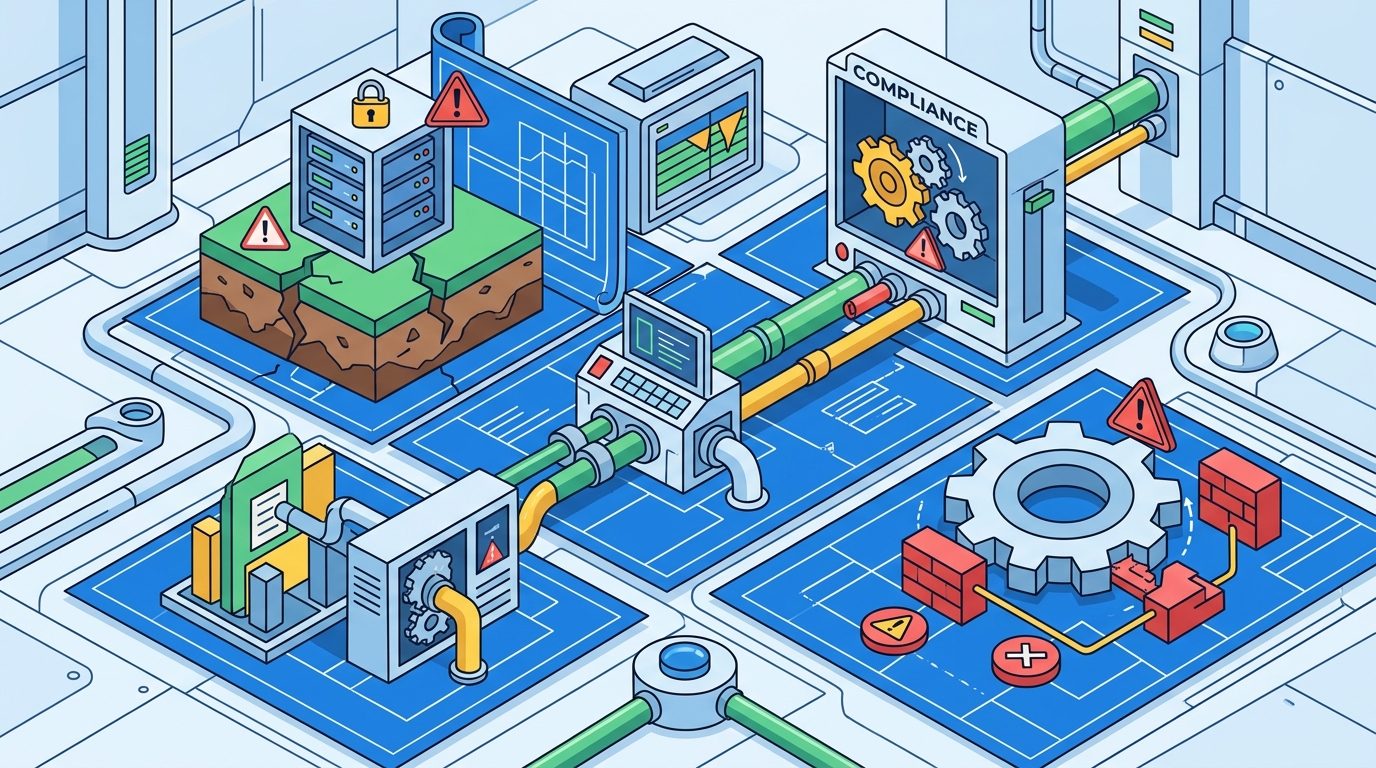
Developers often hardcode brand assets such as logos, color schemes, and domain names into the application codebase. This approach makes it difficult to support multiple clients with different branding requirements. A robust white-label architecture must utilize dynamic configuration tables that store client-specific branding data. This allows for real-time updates to the user interface without requiring code deployments.
Furthermore, email templates and notification systems must be templated to accommodate different brand voices. Failure to do so results in a disjointed customer experience where clients receive communications that do not align with their brand identity. This lack of cohesion can damage the perceived value of the white-label product.
Domain and DNS Management
Managing multiple custom domains for white-label clients is another area where pitfalls occur. Incorrect DNS configurations can lead to SSL certificate errors or mixed-content warnings, which browsers flag as insecure. Proper implementation requires a wildcard SSL certificate or automated certificate management systems like Let's Encrypt. Maranatha Tech Solutions utilizes modern cloud infrastructure to handle these complexities seamlessly, ensuring that each white-label instance is secure and performant.
For technical details on DNS management, refer to the Cloudflare DNS Guide.
Security Vulnerabilities in Multi-Tenant Systems
Multi-tenant architecture is the standard for SaaS and white-label platforms, where a single instance of the software serves multiple customers. However, this model introduces the risk of data leakage between tenants.
Horizontal Privilege Escalation
The most critical security flaw in multi-tenant systems is horizontal privilege escalation. This occurs when a user from one tenant can access data belonging to another tenant. This usually happens due to insufficient validation of tenant IDs in API requests. Developers must implement strict middleware that validates the tenant context for every single database query.
According to the OWASP Top Ten Project, broken access control remains one of the most prevalent web application security risks. Regular penetration testing and code reviews are essential to identify and mitigate these vulnerabilities. Automated security scanning tools should be integrated into the development workflow to catch these issues early.
Data Isolation Strategies
There are three primary strategies for data isolation: separate databases, separate schemas, and shared databases with tenant IDs. Each has trade-offs regarding cost, complexity, and security. Separate databases offer the highest level of isolation but increase operational costs. Shared databases with tenant IDs are more cost-effective but require rigorous application-level security controls. Choosing the right strategy depends on the specific compliance requirements and budget of the project.
For more information on database security, visit the CISA Secure Our World initiative.
Scalability and Performance Bottlenecks
Custom software must be designed to handle growth. A common pitfall is building for current load rather than future scalability. This leads to performance degradation as the user base expands.
Database Indexing and Query Optimization
As data volume increases, poorly optimized database queries become a major bottleneck. Developers often neglect to add appropriate indexes or use inefficient join operations. This results in slow response times and increased server load. Regular database performance monitoring and query analysis are necessary to maintain optimal performance.
According to industry benchmarks, a one-second delay in page load time can result in a 7% reduction in conversions. This economic impact highlights the importance of performance optimization. Techniques such as caching, database sharding, and content delivery networks (CDNs) can significantly improve scalability.
Microservices vs. Monoliths
Deciding between a monolithic architecture and microservices is a critical early decision. While microservices offer scalability and independence, they introduce complexity in terms of deployment and monitoring. For many white-label solutions, a modular monolith may be a more pragmatic starting point. Maranatha Tech Solutions advises clients to start with a well-structured monolith and transition to microservices only when specific scaling needs dictate.
For architectural guidance, explore the Microservices.io Reference.
Vendor Lock-In and Technology Debt
Reliance on proprietary cloud services can lead to vendor lock-in, making it difficult and expensive to migrate to other providers in the future. This is a significant risk for long-term projects.
Abstraction Layers
To mitigate vendor lock-in, developers should use abstraction layers for critical services such as databases, storage, and authentication. This allows for easier migration between providers if needed. For example, using a standard SQL interface rather than a proprietary NoSQL API can provide greater flexibility.
Additionally, maintaining clear documentation of all integrations and dependencies is crucial. This documentation serves as a roadmap for future developers and facilitates smoother transitions if the technology stack changes. Maranatha Tech Solutions prioritizes open standards and portable code to ensure client autonomy.
For insights on cloud strategy, read the AWS Enterprise Strategy Blog.
Key Takeaways
- Compliance First: Integrate GDPR and HIPAA requirements into the initial design phase to avoid costly retrofits.
- Dynamic Branding: Use configuration-driven branding for white-label solutions to support multiple clients efficiently.
- Security Validation: Implement strict tenant isolation and access controls to prevent data leakage in multi-tenant systems.
- Performance Monitoring: Regularly audit database queries and server load to maintain optimal performance as user base grows.
- Technology Portability: Avoid proprietary lock-in by using abstraction layers and open standards for critical services.
- Audit Trails: Ensure immutable logging is built into the core architecture for regulatory compliance.
- Expert Partnership: Work with experienced developers who understand both technical and regulatory landscapes.
Frequently Asked Questions
What is the most common compliance mistake in custom software?
The most common mistake is treating compliance as a post-development checklist item rather than a foundational design requirement. This leads to architectural changes that are expensive and difficult to implement later.
How do white-label solutions handle multiple brand identities?
White-label solutions use dynamic configuration tables to store client-specific branding data, such as logos, colors, and domain names. This allows the application to render differently for each client without code changes.
What is horizontal privilege escalation?
Horizontal privilege escalation is a security vulnerability where a user can access data belonging to another user at the same privilege level, such as another tenant in a multi-tenant system.
Why is vendor lock-in a risk in custom software?
Vendor lock-in occurs when a solution relies heavily on proprietary services from a single cloud provider, making migration difficult and costly. Using abstraction layers and open standards can mitigate this risk.
How can I ensure my custom software is scalable?
Ensure scalability by designing for growth from the start, using appropriate database indexing, implementing caching strategies, and considering a modular architecture that can be scaled independently.
What role does audit logging play in compliance?
Audit logging provides a verifiable record of data access and modifications, which is required by many regulations to prove compliance and investigate security incidents.
When should I choose microservices over a monolith?
Microservices are suitable when you need to scale different parts of the application independently or have multiple teams working on different features. For most startups and white-label solutions, a modular monolith is a better starting point.
How does Maranatha Tech Solutions approach compliance?
Maranatha Tech Solutions integrates compliance into every stage of development, from initial architecture design to final deployment, ensuring that all builds meet relevant regulatory standards.
Start Your Compliant Custom Software Project
Avoiding these common pitfalls requires expertise, experience, and a commitment to excellence. Maranatha Tech Solutions specializes in building custom software, web applications, and AI automation that are secure, compliant, and scalable. Our team brings enterprise-level engineering experience to every project, ensuring that your solution is built to last.
Whether you need a white-label platform, a HIPAA-compliant healthcare app, or a GDPR-ready SaaS product, we have the technical knowledge to help you succeed. Do not let compliance issues derail your project. Contact us today to discuss your technology goals and schedule a consultation.
Schedule a Consultation Now to get started.