
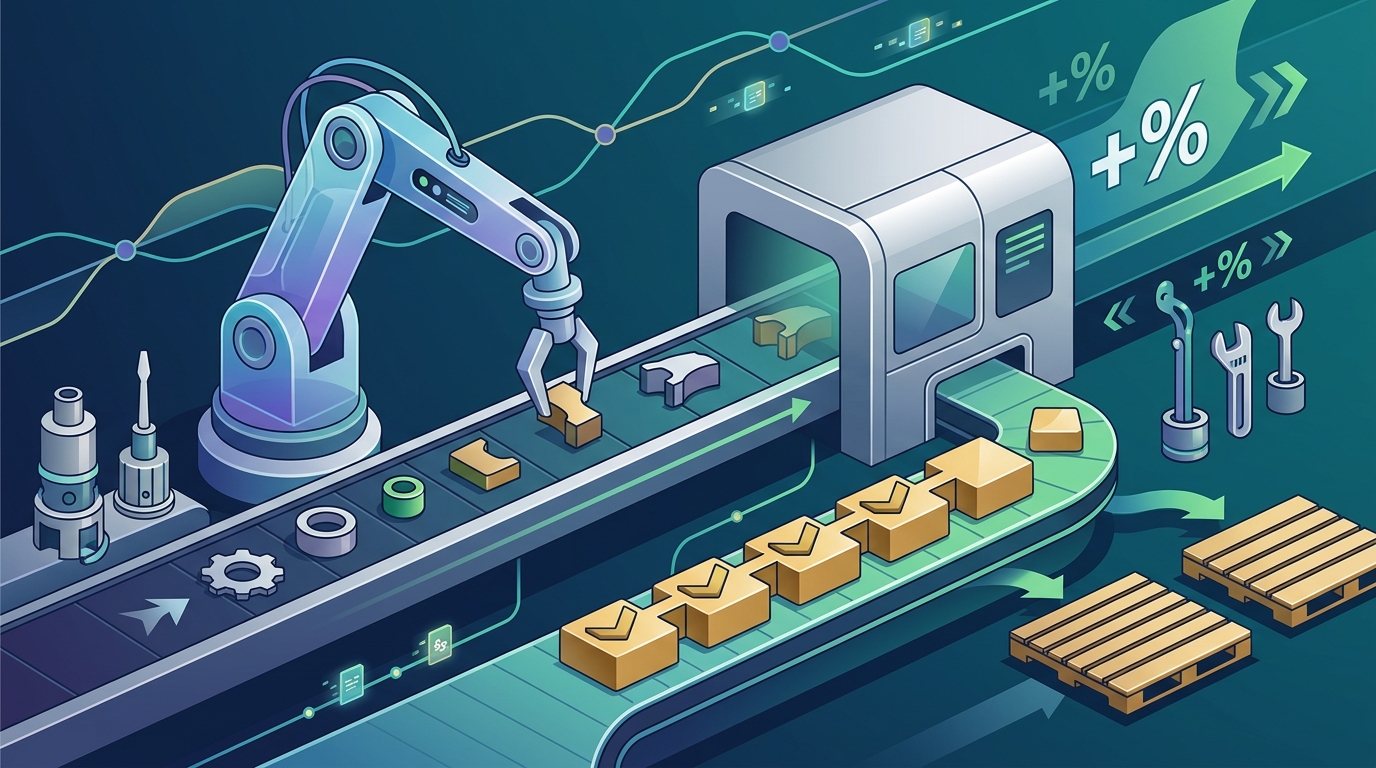
Businesses that integrate artificial intelligence into their core workflows are seeing measurable gains in operational efficiency. According to recent industry analyses, organizations leveraging AI automation report an average productivity increase of 40% within the first year of deployment. This shift is not merely about adopting new technology; it is about restructuring how work gets done to eliminate friction and accelerate decision-making. For leaders in Indianapolis and beyond, understanding the mechanics of AI integration is the first step toward sustainable growth.
Understanding AI Automation
Before diving into technical architectures, it is vital to define what AI automation actually entails in a business context. AI automation is the use of artificial intelligence technologies to perform tasks that traditionally require human intelligence, such as visual perception, speech recognition, and decision-making. Unlike traditional robotic process automation (RPA), which follows rigid, rule-based scripts, AI-driven systems can adapt to unstructured data and evolving conditions.
This distinction is critical for enterprises seeking flexibility. When you implement AI, you are not just automating a process; you are creating a system that learns and improves over time. For example, a customer service chatbot powered by large language models can handle nuanced queries that would stump a standard script. This capability transforms customer support from a cost center into a data-rich engagement channel.
At Maranatha Tech Solutions, we emphasize that AI should serve people, not the other way around. Our approach ensures that automation enhances human capabilities rather than replacing them entirely. This philosophy aligns with our mission to provide trustworthy, relationship-focused technology solutions for small businesses, churches, and nonprofits across Central Indiana.
Identifying High-Impact Opportunities
Not every business process is a candidate for AI automation. Successful implementation begins with a rigorous audit of your current workflows. You must look for tasks that are repetitive, data-heavy, and prone to human error. Common areas for high-impact automation include lead qualification, invoice processing, and inventory management.
Evaluating Data Readiness
AI models are only as good as the data they are trained on. Before engaging a development partner, assess the quality and structure of your existing data. Is it siloed across different platforms? Is it clean and labeled? Poor data hygiene is the number one reason AI projects fail to deliver ROI. If your data is fragmented, the first phase of your project should focus on data integration and normalization.
Defining Success Metrics
Establish clear key performance indicators (KPIs) before writing a single line of code. Will you measure success by reduced response times, increased conversion rates, or lower operational costs? For instance, if you are automating email marketing, track open rates and click-through improvements. If you are automating internal reporting, measure the hours saved by your finance team.
Our team at Maranatha Tech Solutions helps clients define these metrics during the initial consultation. We believe in transparent partnerships where success is measured by tangible business outcomes, not just technical milestones. You can explore our pricing models to understand how we structure engagements for clarity and value.
Choosing the Right Technical Stack
The technology stack you choose will dictate the scalability, security, and maintainability of your AI automation. There is no one-size-fits-all solution, but certain combinations have proven superior for enterprise-grade applications.
Core Technologies
For most modern AI applications, a combination of Python for backend logic and machine learning libraries, and TypeScript for frontend interactivity is ideal. Python offers extensive libraries like TensorFlow and PyTorch, which are essential for building custom models. Meanwhile, TypeScript ensures type safety and robustness in your application layer, reducing runtime errors.
Cloud infrastructure is another critical component. AWS and Google Cloud Platform provide the necessary compute power and managed AI services, such as AWS SageMaker or Google Vertex AI. These platforms allow you to deploy models without managing the underlying hardware, significantly reducing time-to-market.
Security and Compliance
When handling sensitive business data, security cannot be an afterthought. Your stack must support encryption at rest and in transit, role-based access control, and audit logging. Furthermore, if you serve customers in Europe, your automation workflows must comply with GDPR regulations. Maranatha Tech Solutions prioritizes GDPR-compliant builds to ensure your data practices meet international standards. Learn more about our comprehensive service offerings to see how we embed security into every layer of development.
Implementation Phases
Implementing AI automation is a multi-stage process that requires careful planning and execution. Rushing into development without a solid foundation often leads to costly rework. Below is a structured approach to deploying AI solutions effectively.
Phase 1: Discovery and Strategy
This phase involves deep-dive workshops with your stakeholders to map out current workflows and identify automation targets. We analyze your business goals, technical constraints, and data availability. The output is a detailed project roadmap that outlines the scope, timeline, and expected outcomes. This step is crucial for aligning technical capabilities with business objectives.
Phase 2: Prototype and Validation
Before full-scale development, we build a minimum viable product (MVP) or a proof of concept. This prototype allows you to test the AI model's accuracy and usability in a controlled environment. For example, we might deploy a beta version of an AI assistant to a small group of users to gather feedback. This iterative approach minimizes risk and ensures the final product meets user needs.
Phase 3: Development and Integration
Once the prototype is validated, the full development cycle begins. This includes building the backend infrastructure, training the AI models on your specific data, and integrating the solution with your existing CRM, ERP, or other business systems. Our engineers use modern frameworks like React and Node.js to ensure the application is fast, responsive, and scalable. You can view our portfolio to see examples of similar integrations we have delivered.
Phase 4: Deployment and Monitoring
Deployment is not the end of the project. AI models require continuous monitoring to ensure they remain accurate and unbiased as data patterns change. We set up robust monitoring dashboards to track model performance, latency, and error rates. If the model's accuracy drops, we trigger retraining pipelines to update the model with new data. This ongoing support is part of our commitment to being a long-term partner in your success.
Phase 5: Optimization and Scaling
As your business grows, your AI automation must scale accordingly. This might involve adding more users, processing larger volumes of data, or expanding the AI's capabilities to new areas. We help you plan for this scalability from day one, ensuring your architecture can handle increased load without degradation in performance.
Key Takeaways
- AI Automation Definition: AI automation is the use of artificial intelligence technologies to perform tasks that traditionally require human intelligence, such as visual perception, speech recognition, and decision-making.
- Data Readiness is Critical: Poor data hygiene is the number one reason AI projects fail. Ensure your data is clean, labeled, and integrated before starting development.
- Technical Stack Matters: A combination of Python for ML, TypeScript for frontend, and AWS/GCP for infrastructure is ideal for scalable, secure AI applications.
- Iterative Development: Build a prototype or MVP first to validate accuracy and usability before full-scale deployment.
- Continuous Monitoring: AI models require ongoing monitoring and retraining to maintain accuracy and adapt to changing data patterns.
- Security First: Prioritize GDPR compliance and robust security measures to protect sensitive business data.
- Partnership Approach: Choose a development partner who offers long-term support and aligns with your business values.
Frequently Asked Questions
How long does it take to implement AI automation?
The timeline varies based on complexity. A simple automation might take 4-8 weeks, while a complex, multi-system integration could take 3-6 months. Our team provides a detailed timeline during the discovery phase.
Do I need a large team to manage AI automation?
No. With managed services and cloud-based tools, you can operate AI systems with a small internal team. We provide the technical expertise and ongoing support to keep your systems running smoothly.
Is AI automation secure for sensitive data?
Yes, if implemented correctly. We prioritize security by using encryption, secure APIs, and compliance frameworks like GDPR. We also conduct regular security audits to ensure your data remains protected.
Can AI automation integrate with my existing software?
Absolutely. One of the key benefits of modern AI development is seamless integration with existing CRMs, ERPs, and databases. We specialize in creating custom connectors to ensure smooth data flow.
What is the cost of implementing AI automation?
Costs depend on the scope and complexity of the project. We offer flexible pricing models, including fixed-price engagements and hourly consulting, to fit various budgets. View our pricing page for more details.
How do I measure the ROI of AI automation?
ROI is measured by comparing the cost of implementation against the savings from reduced labor, increased efficiency, and improved revenue. We help you define these metrics upfront to track progress.
What industries benefit most from AI automation?
Industries with high volumes of repetitive tasks, such as healthcare, finance, real estate, and customer service, benefit significantly. However, any business can leverage AI to improve decision-making and operational efficiency.
Start Your AI Automation Journey
Implementing AI automation is a transformative step for any business. It requires careful planning, technical expertise, and a trusted partner who understands your unique challenges. Maranatha Tech Solutions is here to guide you through every stage of the process, from initial strategy to long-term support.
We are based in Westfield, Indiana, but we serve clients across the country. Whether you need custom software, web development, or AI automation, we bring enterprise-level engineering experience to your project. Schedule a consultation today to discuss how we can help you achieve your technology goals.