

Custom React Development: Building Scalable Web Applications
Modern web applications demand more than just static pages; they require dynamic, responsive, and highly interactive user experiences. According to recent industry data, React remains the dominant frontend library, powering millions of websites globally due to its component-based architecture. This guide explores how custom React development transforms business logic into performant digital products, ensuring long-term scalability and maintainability. (About Maranatha Tech Solutions)
Why Choose Custom React Development?
React is not merely a library; it is a philosophy of building user interfaces through reusable components. This approach allows development teams to isolate complex logic, test individual units, and maintain codebases that grow alongside your business. For enterprises, this modularity reduces technical debt and accelerates feature delivery.
One of the primary advantages of React is its virtual DOM. This mechanism optimizes rendering performance by updating only the parts of the UI that have changed, rather than reloading the entire page. This results in faster load times and smoother interactions, which are critical for user retention. React's official documentation highlights how this declarative approach simplifies debugging and state management.
Furthermore, React's ecosystem is vast and mature. From state management libraries like Redux and Zustand to routing solutions like React Router, developers have access to robust tools that solve common problems efficiently. This ecosystem support ensures that custom solutions can leverage community-tested patterns rather than reinventing the wheel.
Architecting for Scale
Building a custom application requires more than just writing components; it demands a solid architectural foundation. At Maranatha Tech Solutions, we prioritize enterprise-level engineering practices to ensure your application can handle growth without compromising performance.
Component-Based Structure
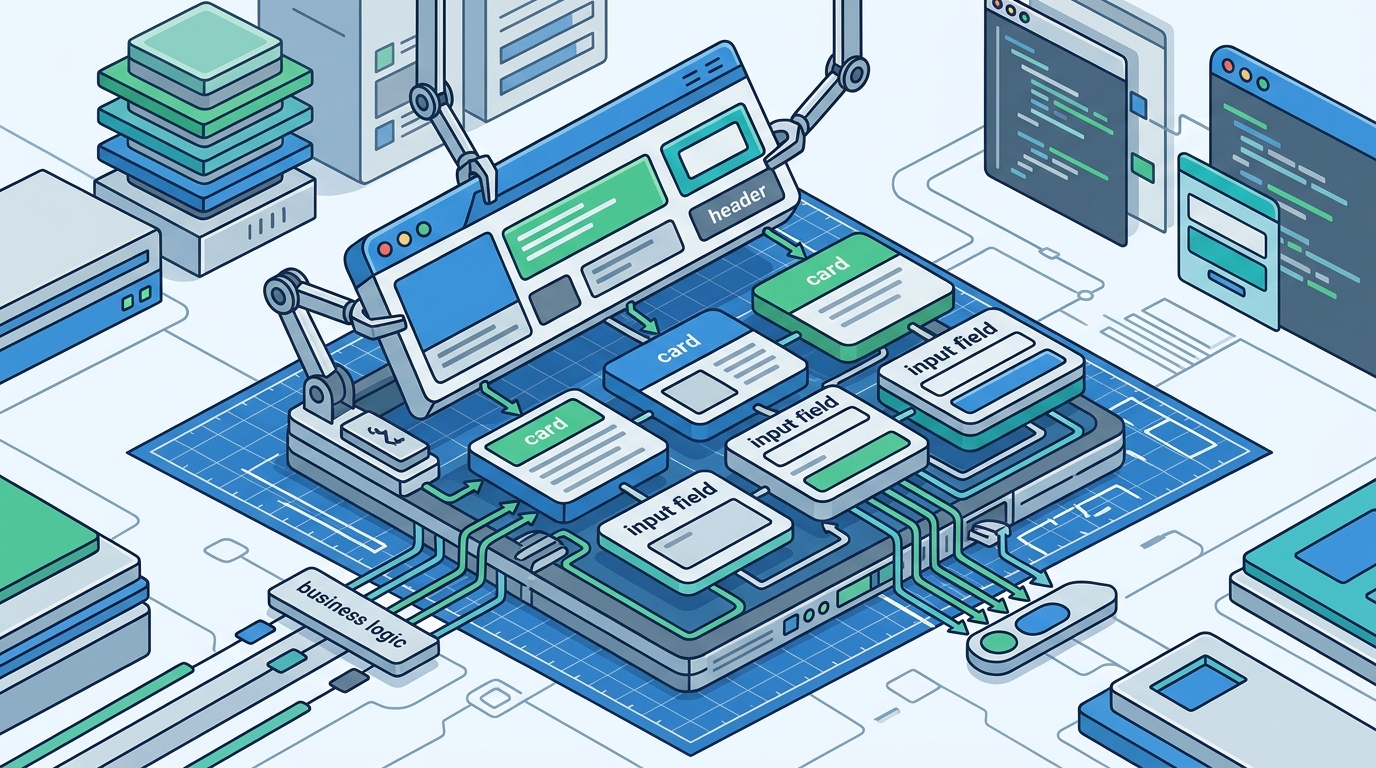
React enforces a hierarchical component structure. Each component manages its own state and props, creating a clear data flow. This separation of concerns makes the codebase easier to navigate for new developers and simplifies future updates. For example, a complex dashboard can be broken down into smaller, manageable widgets like charts, tables, and filters.
State Management Strategies
As applications grow, managing global state becomes complex. We utilize context APIs for lighter loads and specialized libraries for complex data flows. Proper state management prevents "prop drilling" and ensures that data updates propagate efficiently across the application. This is crucial for real-time applications where data consistency is paramount.
Performance Optimization
Performance is not an afterthought; it is a core requirement. We employ techniques such as code splitting, lazy loading, and memoization to ensure that users only download the code they need. This reduces the initial bundle size and improves Time to Interactive (TTI) metrics. Web.dev performance guidelines provide essential benchmarks for these optimizations.
The Modern React Stack
A custom React application is rarely built in isolation. It is part of a larger ecosystem that includes backend services, databases, and deployment infrastructure. Our team selects technologies based on the specific needs of your project, ensuring compatibility and scalability.
| Technology Layer | Recommended Tools | Use Case |
|---|---|---|
| Frontend Framework | React, Next.js | Dynamic UIs and Server-Side Rendering |
| Styling | Tailwind CSS, Styled Components | Responsive and Maintainable Design |
| Backend API | Node.js, NestJS | High-Performance Server Logic |
| Database | PostgreSQL, MongoDB | Reliable Data Storage and Retrieval |
| Deployment | AWS, Vercel | Scalable Cloud Infrastructure |
For instance, when building multi-tenant SaaS platforms like Servora, we utilize a robust stack that supports isolation and security. This ensures that each client's data remains secure while sharing the underlying infrastructure efficiently.
Development Lifecycle
Our development process is iterative and transparent. We believe in delivering value early and often, allowing stakeholders to provide feedback that shapes the final product.
Discovery and Planning
Before writing code, we engage in deep discovery sessions. We map out user journeys, define technical requirements, and establish success metrics. This phase ensures that the custom solution aligns perfectly with your business goals. You can schedule a consultation to discuss your specific needs.
Design and Prototyping
We create high-fidelity prototypes to visualize the user experience. This allows for rapid iteration on design elements before committing to development. It also helps in identifying potential usability issues early in the process.
Development and Testing
Our engineers write clean, documented code following industry best practices. We employ automated testing frameworks to ensure reliability. Unit tests, integration tests, and end-to-end tests are all part of our quality assurance protocol. This rigorous testing reduces the risk of bugs in production.
Deployment and Maintenance
We deploy applications using CI/CD pipelines for seamless updates. Post-launch, we offer ongoing support and maintenance to ensure the application remains secure and performant. Our team monitors performance metrics and addresses any issues promptly.
React vs. Alternatives
While React is a powerful choice, it is not the only option. Understanding the trade-offs helps in making an informed decision for your specific project.
Vue.js offers a gentler learning curve and is excellent for smaller teams or projects requiring rapid development. However, React's larger ecosystem and job market make it more suitable for long-term enterprise growth.
Angular provides a comprehensive framework with built-in tools for routing, HTTP client, and state management. It is ideal for large, complex applications where structure is critical. However, it can be heavier and more rigid than React.
Static Site Generators like Gatsby or Hugo are perfect for content-heavy sites that do not require complex interactivity. They offer superior SEO and performance for blogs and marketing sites. For dynamic applications, however, React remains the superior choice.
For more insights on framework selection, you can read MDN's guide on web frameworks.
Key Takeaways
- React's component-based architecture enables modular, maintainable, and scalable codebases.
- The virtual DOM significantly improves performance by minimizing direct DOM manipulation.
- A robust tech stack including Node.js and PostgreSQL ensures backend reliability.
- Maranatha Tech Solutions offers enterprise-level engineering with 15+ years of experience.
- Our team specializes in custom SaaS, web applications, and AI automation.
- Proper state management is critical for complex application data flow.
- CI/CD pipelines facilitate seamless deployment and updates.
Frequently Asked Questions
How long does it take to build a custom React application?
Timelines vary based on complexity. A simple MVP might take 3-6 months, while a complex enterprise platform could take 6-12 months. We provide detailed estimates during the discovery phase.
Can you migrate an existing application to React?
Yes, we specialize in incremental migrations. We can wrap existing components in React or rebuild the application from the ground up, depending on your needs and budget.
What is the cost of custom React development?
Costs depend on the scope, features, and team size. We offer flexible engagement models, including fixed-price projects and hourly rates. Contact us for a detailed quote.
Do you provide ongoing support after launch?
Absolutely. We offer managed IT services and maintenance plans to ensure your application remains secure, updated, and performant over time.
Is React suitable for SEO?
Yes, especially when using frameworks like Next.js that support server-side rendering. This ensures that search engines can crawl and index your content effectively.
How do you ensure data security?
We implement industry-standard security practices, including encryption, secure API integrations, and regular vulnerability assessments. Our builds are GDPR-compliant.
Can you integrate third-party APIs?
Yes, we have extensive experience integrating payment gateways, CRM systems, and other third-party services into React applications.
Start Your Custom React Project
Ready to build a scalable, high-performance web application? Maranatha Tech Solutions combines enterprise-level engineering with a personalized approach to deliver software that lasts. Whether you need a custom SaaS platform, a dynamic web app, or AI automation, we are here to help.
Visit our portfolio to see our work, or contact us today to schedule a consultation. Let's build something great together.